Hubei · 湖北 (hoo-bay) · Central China · 2026

Hubei, Beyond Wuhan

The 7-day verdict: yes. Fly into Wuhan, then run Wuhan → Wudang → the Three Gorges on one high-speed-rail line.

By Wei Chen Updated August 2026 Firsthand trips across the province

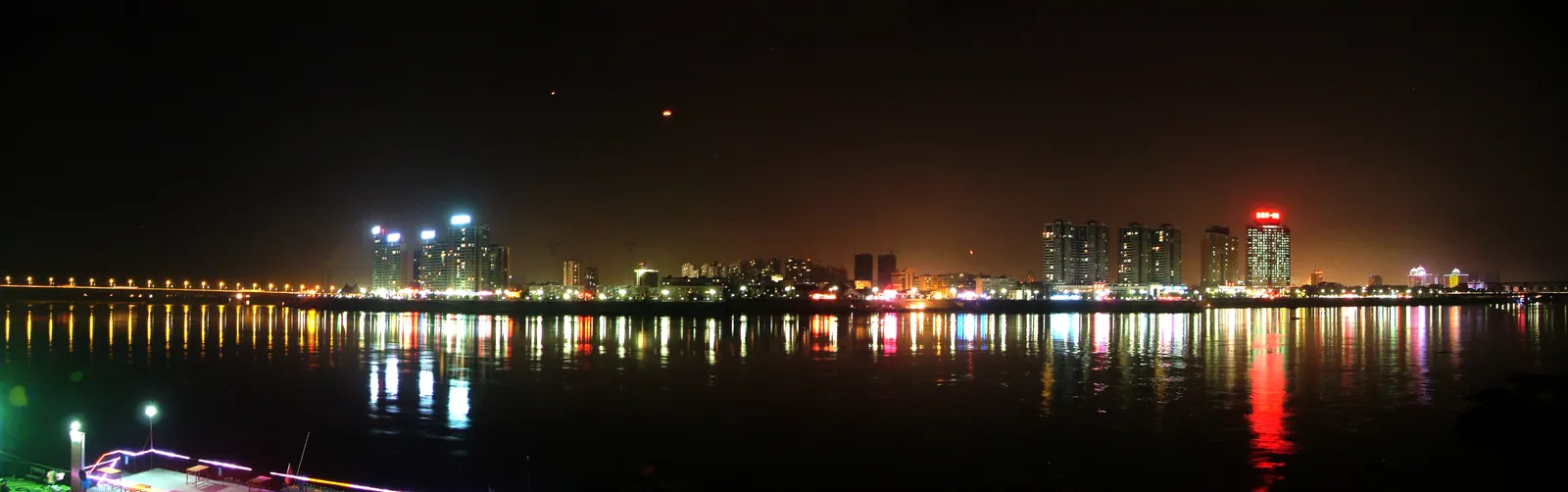
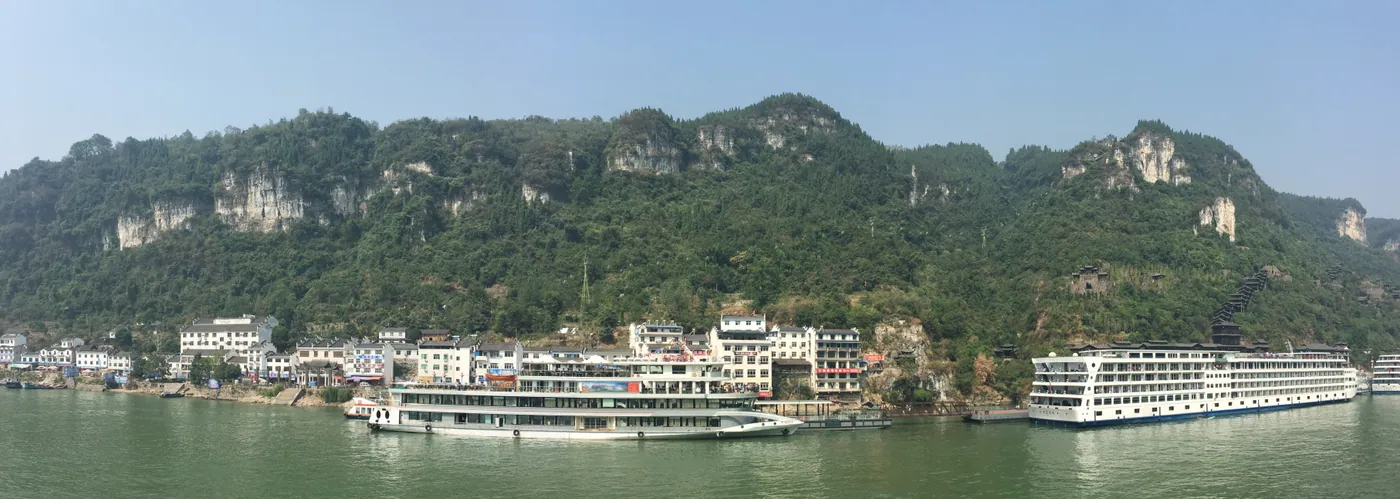
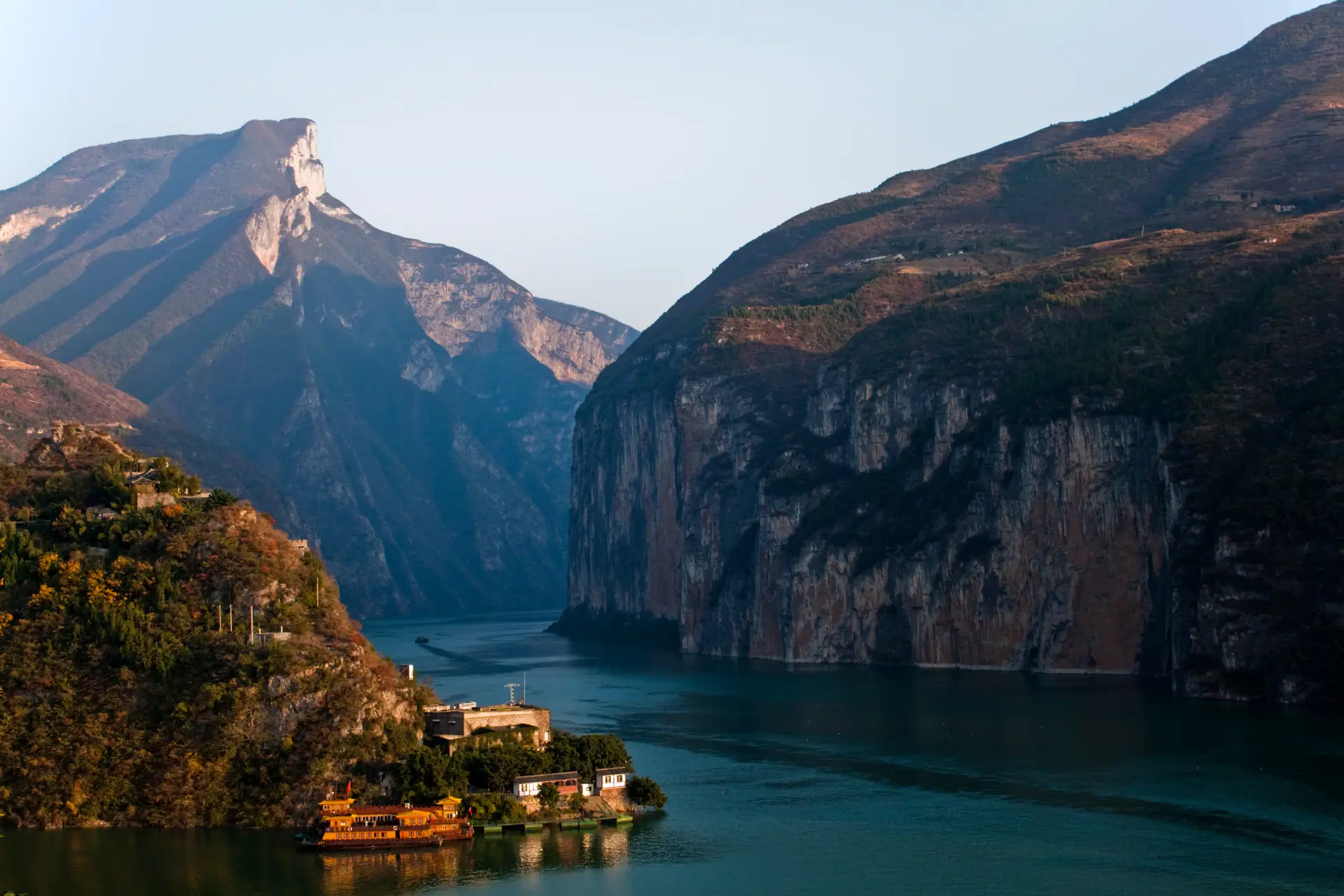
Qutang Gorge on the Yangtze, seen from Baidicheng in Hubei
The Yangtze at Qutang Gorge 长江 · 瞿塘峡

Hubei at a glance

185,900km²

Area of Hubei

About the size of Washington State (US)

58.3million

Population

About the population of Italy

13prefectures

Prefecture-level divisions

Wuhan, Yichang, Xiangyang, Jingzhou and more

1,000+lakes

The 'Province of a Thousand Lakes'

China's most lake-rich province — 湖 (hú) means lake

Your trip, at a glance

7days

Recommended for the classics

Wuhan, Wudang, the Three Gorges

3directions

From Wuhan

Northwest · West · Southwest

200–700CNY/day

Daily budget

Backpacker to mid-range

3,106m

Shennong Peak

The 'roof of central China'

The honest split

Is Hubei worth visiting?

Yes — if one of these is already on your list. Here is the straight split.

Short version: worth a dedicated trip if you care about Three Kingdoms history, Taoist Wudang, the Three Gorges or serious food. Only want karst peaks and terraces? Head to Guangxi instead.

Go

Three Kingdoms history

Go. 70 of the Romance's 120 chapters are set here — Chibi, Jingzhou, Xiangyang and Longzhong.

Go

Taoism & tai chi

Go. Wudang is the cradle of tai chi — a working Taoist mountain, not a museum.

Go

The Three Gorges & the Yangtze

Go. The world's largest dam and Xiling Gorge are two hours from Wuhan by rail.

Go

Breakfast & street food

Go. Wuhan's guozao breakfast is the best morning food in central China.

Skip

Karst peaks & rice terraces only

Skip. For that, go to Guangxi instead.

Skip

Beaches & tropical warmth

Skip. Hubei is landlocked, with a furnace of a summer.

Four worlds, one river

Read the province like a river — forest and Taoist peaks in the west, gorges in the middle, the thousand-lake heartland in the east.

Hubei's three directions

Three directions from Wuhan. Pick one and the route writes itself.

Wudang + Shennongjia, 鄂西北 direction of Hubei
3–4 days

Northwest 鄂西北

Wudang + Shennongjia

Taoist temples, tai chi and primeval forest

Climb Wudang's temples, then drive into Shennongjia for golden monkeys and misty wetlands. Rail, then a private car.

TaoismTai chiForestWildlife
Yichang & the Three Gorges, 鄂西 direction of Hubei
1–2 days

West 鄂西

Yichang & the Three Gorges

The dam, Xiling Gorge and the Yangtze

The dam, Xiling Gorge by boat, and the river that carved China. Two hours from Wuhan by rail.

Three Gorges DamRiver cruiseEngineering
Enshi Grand Canyon, 鄂西南 direction of Hubei
2–3 days

Southwest 鄂西南

Enshi Grand Canyon

A Colorado-style canyon and Tujia culture

The 150m stone pillar of Enshi Grand Canyon, the Qingjiang Gallery and Tujia villages — fewer crowds, more raw China.

CanyonCavesTujia cultureHiking

If you only have one direction: west for the Three Gorges (1-2 days), northwest for Wudang + Shennongjia (3-4 days), southwest for Enshi (2-3 days).

Find your match

Which Hubei is yours?

Six traveler types — one of them is you.

1

First-timer

The classic loop, logistics included

Wuhan → Yichang (Three Gorges) → Wudang

7 days

The safest first Hubei trip: the capital's highlights, the world's biggest dam and one sacred mountain, all on high-speed rail.

WuhanYichang & Three GorgesWudang Mountains
2

Taoist & martial arts

Climb Wudang, the cradle of tai chi

Wuhan → Xiangyang → Wudang

4-5 days

Walk the Ming temples where tai chi was born, catch morning practice in the courtyards, and stop in Xiangyang on the way west.

Wudang MountainsXiangyang
3

Nature & wildlife

Shennongjia's primeval forest

Yichang → Shennongjia

3 days

China's only triple-UNESCO forest, with golden snub-nosed monkeys and the misty Dajiu Lake wetlands.

Shennongjia
4

Three Kingdoms fan

Chase the Red Cliffs and the walled cities

Wuhan → Chibi → Jingzhou → Xiangyang

3-4 days

More than 70 of the Romance's 120 chapters are set in Hubei. Walk the Chibi battlefield, the Jingzhou wall and Zhuge Liang's Longzhong.

ChibiJingzhou Ancient CityXiangyang
5

Canyon hiker

Enshi's Colorado-style gorge

Wuhan → Enshi Grand Canyon

3 days

The One Pillar of Fragrance, the Qingjiang Gallery and Tenglong Cave — Hubei's most underrated corner.

Enshi Grand Canyon
6

Food obsessive

Guozao: Wuhan's breakfast ritual

Wuhan only

3 days

Hot dry noodles, doupi, Wuchang fish and the province's famous crayfish. Wuhan's breakfast culture is the best morning food in central China.

Wuhan

Wuhan is the hub, everything else radiates

Every trip starts in Wuhan and fans out along the Yangtze — four directions, all a few hours by rail.

The hub

Wuhan 武汉

The capital, the gateway and the breakfast capital.

Northwest 鄂西北

Wudang & Xiangyang

Taoist peaks and the Three Kingdoms' Longzhong

  • Wudang Mountains 武当山 3 h by rail + shuttle
  • Xiangyang 襄阳 1.5 h by rail

West 鄂西

The Yangtze spine

The dam, the gorges, the forest and the walled city

  • Jingzhou 荆州 1 h by rail
  • Yichang · Three Gorges 宜昌三峡 2 h by rail
  • Shennongjia 神农架 4 h by road from Yichang

Southwest 鄂西南

Enshi

The Colorado-style canyon and Tujia culture

  • Enshi Grand Canyon 恩施大峡谷 3.5 h by rail + shuttle

Southeast 鄂东南

Chibi

The Red Cliffs battlefield and hot springs

  • Chibi 赤壁 40 min by rail

Eight places worth planning around

Grouped by direction from Wuhan, west to east along the Yangtze. Each card lists how long to stay and who it is for.

East · Wuhan & the heartland

The capital, the breakfast ritual and the Red Cliffs

Wuhan 武汉, Hubei
2 to 3 days

Wuhan 武汉

Capital · eastern Hubei

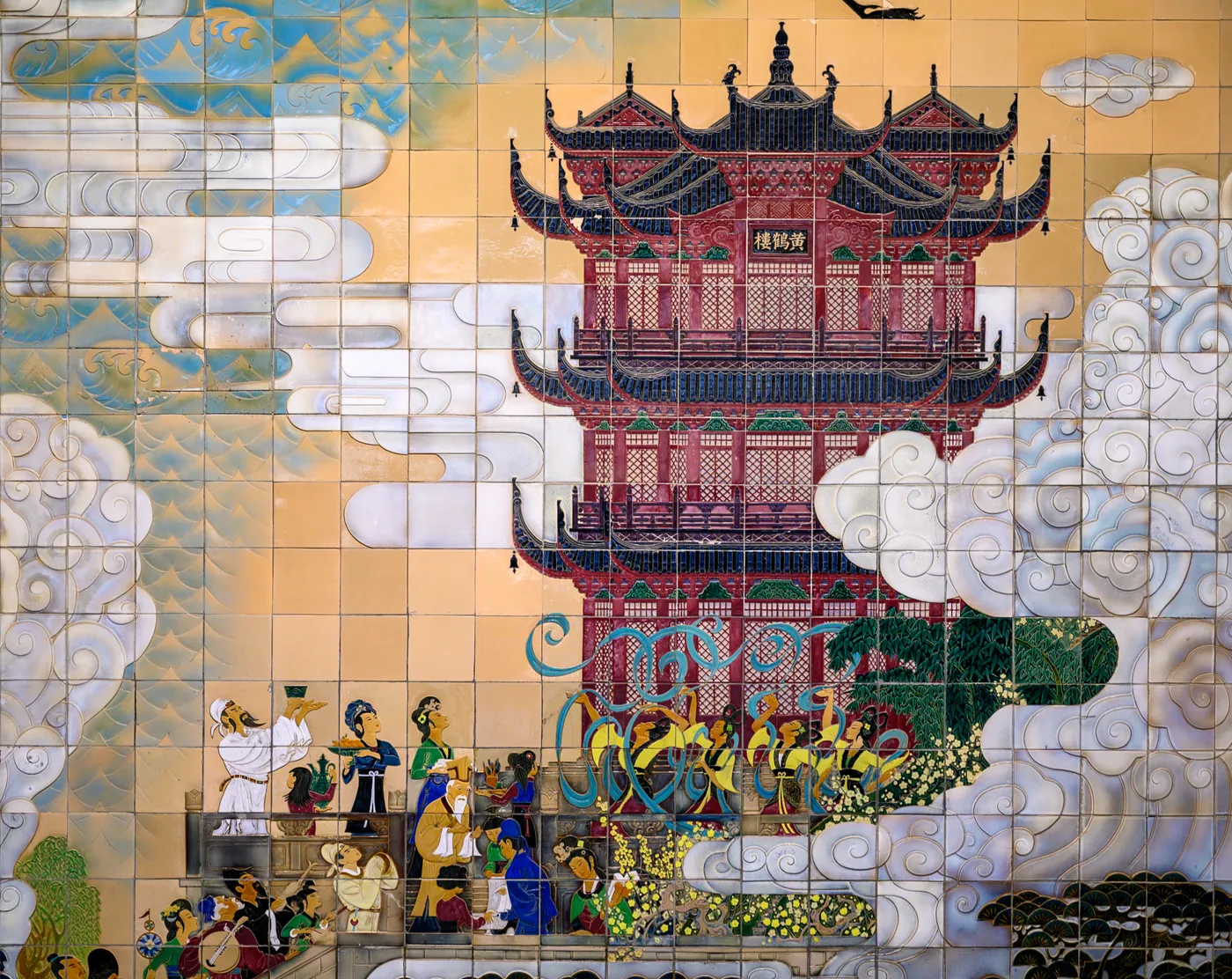
Yellow Crane Tower, East Lake and the breakfast that starts every day

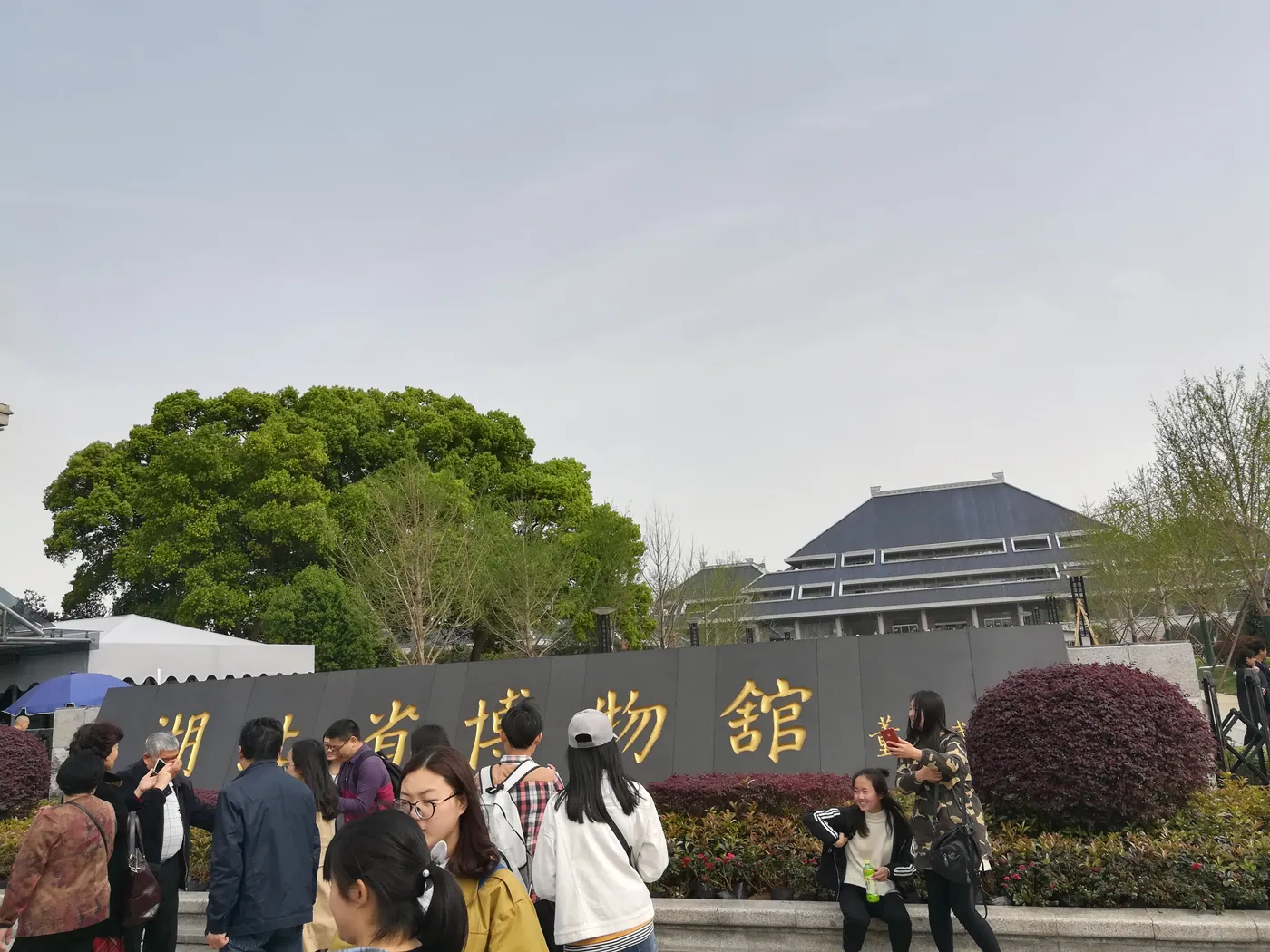
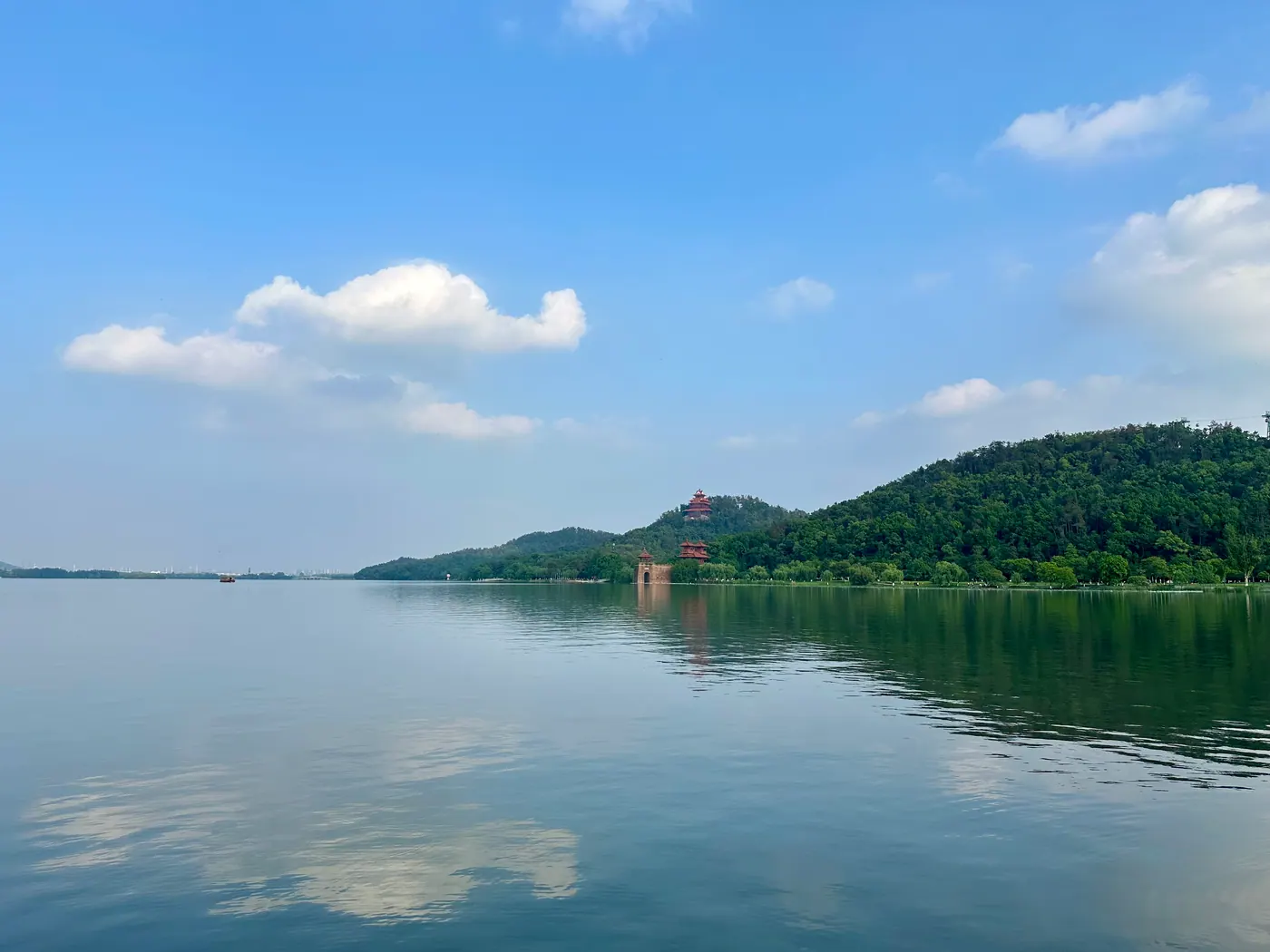
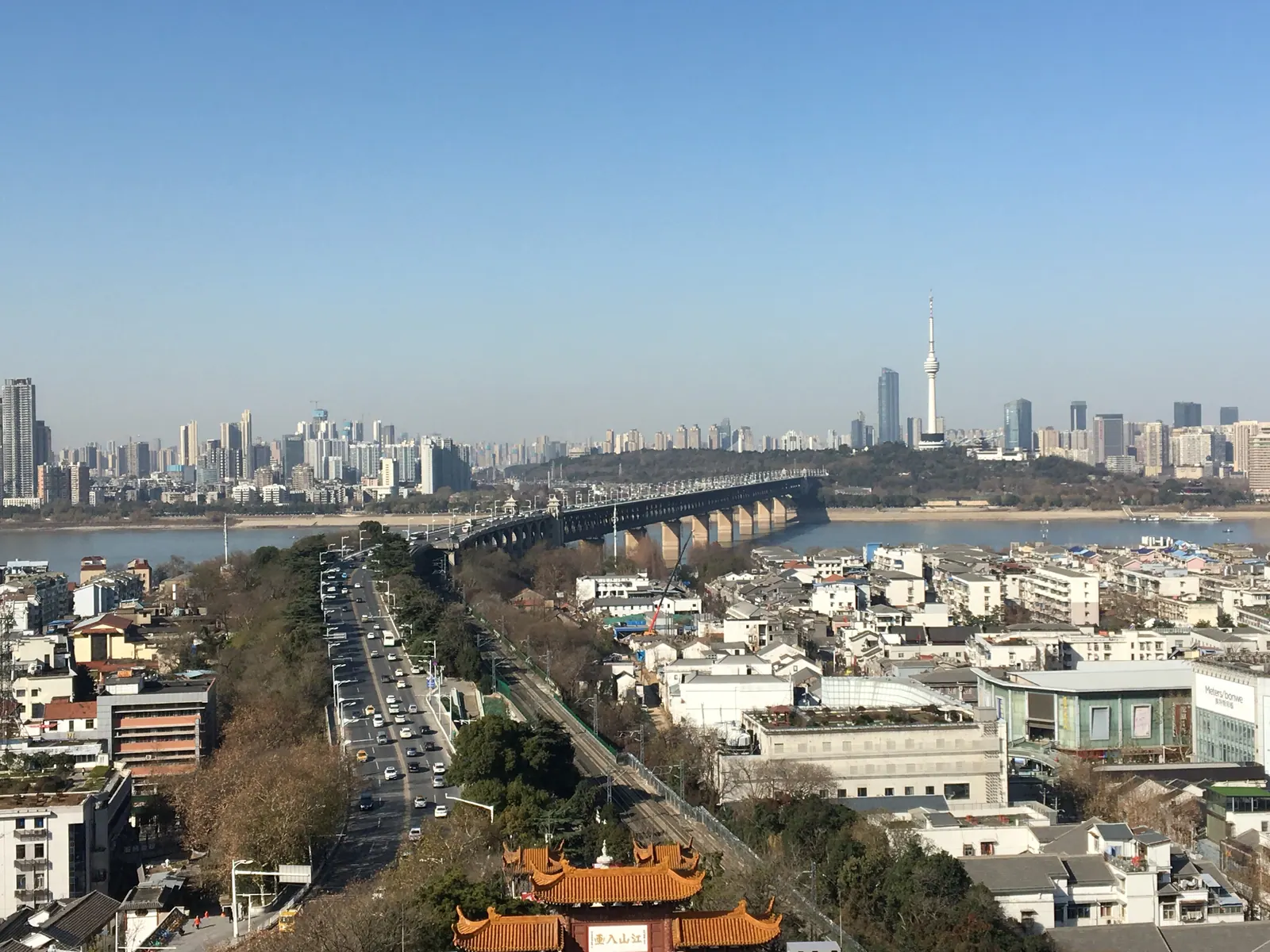
Wuhan (武汉) is the 'thoroughfare of nine provinces' — China's great crossroads, where the Yangtze and the Han rivers meet and a dozen high-speed rail lines converge. It is the entry point to all of Hubei and a destination in its own right. The Yellow Crane Tower (黄鹤楼) on Snake Hill is the city's emblem: first built by the Wu kingdom around 223 AD as a military watchtower, immortalized in poems by Cui Hao and Li Bai, and rebuilt in 1985 in concrete. Its upper floors look straight down the Yangtze and across the Wuhan Yangtze River Bridge, China's first combined road-and-rail crossing, completed in 1957. East Lake (东湖), at 33 square kilometers, is the largest urban lake in China — six times the size of Hangzhou's West Lake — ringed by cycling paths, plum and cherry gardens, and the quiet Moshan hills. The Hubei Provincial Museum holds the bronze chime bells from the 2,400-year-old tomb of Marquis Yi of Zeng and the Sword of Goujian, two of China's most important archaeological objects, plus a daily chime-bell performance. Wuhan's real soul is its breakfast: the city eats hot dry noodles, doupi and fried dough before 9 AM, standing at stalls or perched on plastic stools, in a ritual called guozao (过早). The old Hankou concession district along the riverfront, a legacy of 19th-century treaty-port days, adds European arcades and the city's best evening walks. Wuhan also made modern history: the 1911 Wuchang Uprising that ended China's imperial era began here, a fact the city's memorials quietly underline.

Yellow Crane Tower over the YangtzeEast Lake and Moshan by bikeHubei Provincial Museum (chime bells, Sword of Goujian)Yangtze River Bridge (1957)

We started our first Wuhan morning on Hubu Lane at 6:30 AM, a bowl of hot dry noodles in one hand and a cup of soupy rice wine in the other, watching the city wake up around us. The Yellow Crane Tower is a concrete rebuild and, honestly, more impressive from the outside than inside, but the view down the Yangtze from its upper floor is the postcard Hubei deserves — go at sunset when the bridge lights come on. The provincial museum was the surprise: standing in front of the 2,400-year-old chime bells while the daily performance played them was the single most transportive hour we spent in the province, and the Sword of Goujian, still sharp-edged after two and a half millennia, is worth the queue. East Lake was the antidote to the city's density — we rented a bike and spent an afternoon on the lakeside paths, stopping at a plum garden and a dock where old men fished in silence. Wuhan rewards you for eating early, walking the riverfront after dark, and accepting that the tower is a viewpoint with a story rather than an ancient monument.

Best for

First-time visitors, history and museum lovers, food travelers, city-break travelers

Eat this

Hot dry noodles (热干面), Doupi (豆皮), Wuchang fish (武昌鱼)

Climate, transport, stay & a day plan

Climate

Subtropical monsoon, 3-10°C in winter and 28-40°C in summer; hot, humid summers, mild springs and autumns

How to get there

Wuhan is the transport hub of central China — the usual entry point for all of Hubei.

Train: High-speed rail from Beijing (4.5h), Shanghai (4h), Guangzhou (3.5h) and Chengdu (6h). Wuhan has three main stations; check which one your train uses.

Flight: Wuhan Tianhe Airport (WUH), 25km from the city, with direct international flights and a metro line into town.

Where to stay

Hankou riverside hotels (CNY 300-700) - International chains and boutique stays along the historic Hankou riverfront, near the best breakfast streets.

Wuchang / university district (CNY 200-500) - Younger, cheaper and close to East Lake and the museum. Good for metro access to everything.

Know before you go

Avoid July and August: Wuhan is one of China's 'three furnaces'. Highs of 36-40°C with humidity make sightseeing miserable. Spring and autumn are the sweet spots.

The tower is a rebuild: Yellow Crane Tower was rebuilt in 1985 in concrete. Go for the view and the history, not for an ancient structure. Sunrise and sunset are the best light.

A sample day 1

  • -Morning: guozao breakfast on Hubu Lane, then the Yellow Crane Tower
  • -Afternoon: Hubei Provincial Museum (chime-bell performance)
  • -Evening: Hankou riverfront and Jianghan Road

A sample day 2

  • -Morning: East Lake and Moshan by bike
  • -Afternoon: Yangtze River Bridge walk
  • -Evening: doupi and hot dry noodles on a back street
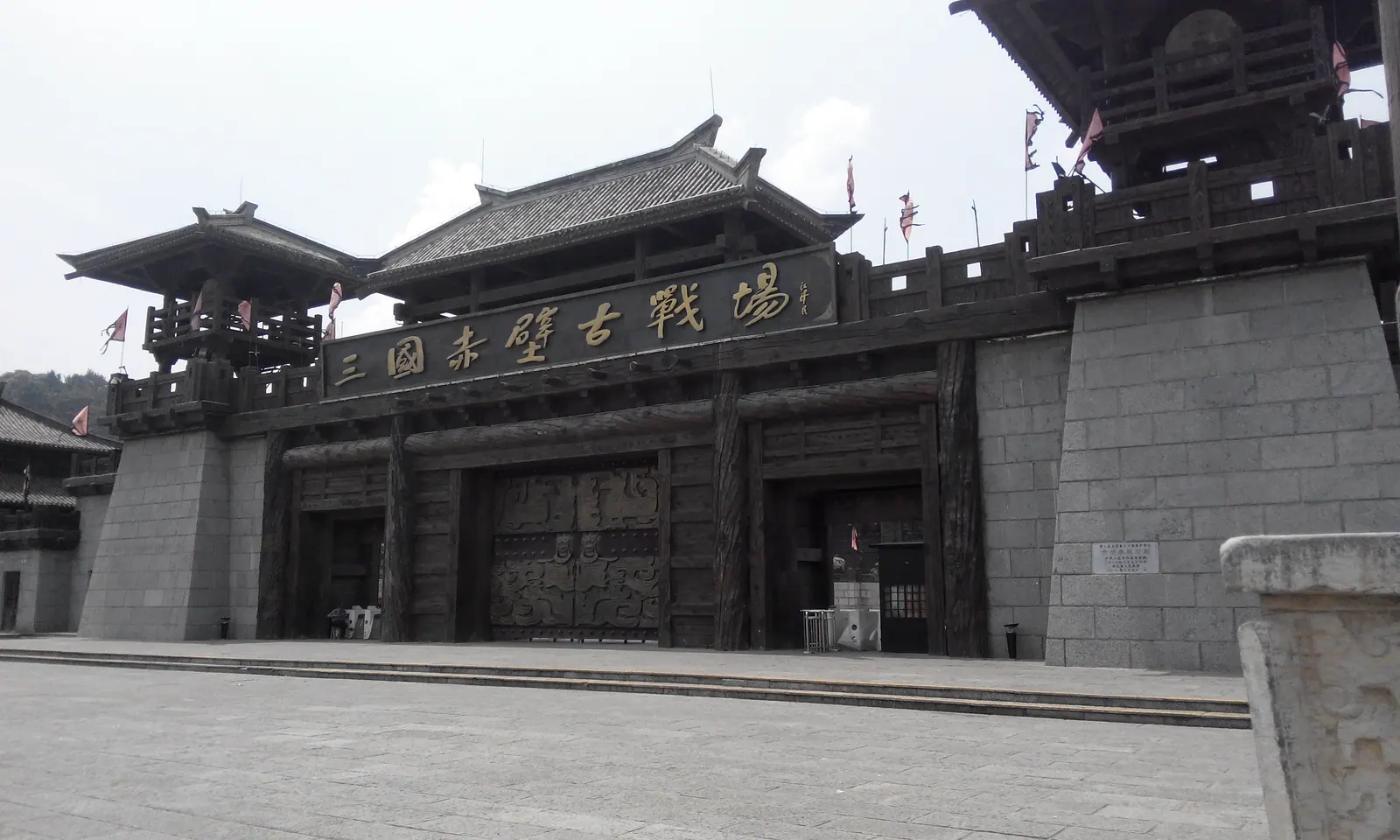
Chibi 赤壁, Hubei
1 day (battlefield plus the hot springs)

Chibi 赤壁

Xianning · southeastern Hubei

The battlefield of Red Cliffs, where the Three Kingdoms turned

Chibi (赤壁), near Xianning in southeastern Hubei, is where the Battle of Red Cliffs was fought in the winter of 208 AD — the naval battle in which the allied forces of Sun Quan and Liu Bei burned Cao Cao's fleet and halted his southward conquest, a turning point that defined the Three Kingdoms era. The Chibi Ancient Battlefield (赤壁古战场) is a riverside park with the Red Cliff inscription carved into the rock, a statue of the strategist Zhou Yu, and viewing points over the Yangtze where the battle is said to have been fought. It is a site of literary and historical pilgrimage rather than surviving architecture — the interest comes from the story, and it is one of the most famous episodes in Chinese history, retold in the Romance, in opera, and in films. The region's second draw is the Xianning hot springs, a cluster of spa resorts that make Chibi a natural pairing for a relaxing overnight, and the nearby Lu Shui Lake offers boat trips and island scenery. For most travelers, Chibi is a short detour from Wuhan rather than a base — best for readers of the Romance of the Three Kingdoms and hot-spring fans, and best paired with a soak in the cooler months.

Chibi Ancient Battlefield and the Red Cliff inscriptionZhou Yu statue over the YangtzeXianning hot springsLu Shui Lake

Standing at the Red Cliff overlook, reading the inscription and looking out over the Yangtze, the battle finally had a geography — you can imagine the burning fleet, the wind, the turning of a war. It is a park built around a story, and if you know the story it lands; if you do not, it is a pleasant riverside walk. We paired it with an afternoon at the Xianning hot springs, which turned a history stop into a genuinely relaxing break — the springs are the real reason to make it an overnight. The honest verdict: Chibi is for the Three Kingdoms reader, and it works best as a half-day detour plus a soak, not a destination on its own.

Best for

Three Kingdoms pilgrims, hot-spring fans, travelers wanting a quiet Yangtze stop

Eat this

Chibi fish balls (赤壁鱼丸), Xianning bamboo-shoot dishes (咸宁竹笋)

Climate, transport, stay & a day plan

Climate

Subtropical, 4-10°C in winter and 28-36°C in summer; the hot springs are best in the cooler months

How to get there

Chibi is in southeastern Hubei, a short high-speed rail ride from Wuhan toward Changsha.

Train: High-speed rail from Wuhan (30-40min, CNY 40-60) to Chibi North station, then a short transfer to the battlefield.

Flight: No airport; arrive by rail from Wuhan, or drive about 2 hours from the capital.

Where to stay

Xianning hot-spring resorts (CNY 300-800) - Spa resorts with private and public pools, the reason to make Chibi an overnight stop.

Chibi town hotels (CNY 150-350) - Simple stays near the battlefield, useful if you want an early start.

Know before you go

It is a commemorative park: There are no surviving battlefield ruins. The value is the story and the riverside setting; set expectations accordingly.

Combine with the hot springs: The battlefield alone is a half day. Pair it with Xianning's hot-spring resorts to make the detour worth the travel.

A sample day 1

  • -Morning: Chibi Ancient Battlefield and the Red Cliff overlook
  • -Afternoon: Xianning hot springs
  • -Evening: return to Wuhan

Northwest · Wudang & Xiangyang

Taoist peaks and the Three Kingdoms' Longzhong

Wudang Mountains 武当山, Hubei
1 to 2 days (overnight to catch sunrise)

Wudang Mountains 武当山

Shiyan · northwest Hubei

The Taoist mountain where tai chi was born

The Wudang Mountains (武当山), near Shiyan in northwest Hubei, are the spiritual counterweight to Shaolin: where Shaolin is Buddhist and external, Wudang is Taoist and internal — the birthplace of tai chi and Wudang kung fu. The mountain has been a Taoist center since the Tang dynasty, but its crown is the Ming-era campaign ordered by the Yongle Emperor, who in the early 15th century sent a reported 300,000 workers to raise a complex of palaces, temples, shrines and bridges across the slopes, all dedicated to the god Zhenwu. The Golden Hall (金顶) at the summit of Tianzhu Peak (1,612m) is the centerpiece: a gilded bronze hall assembled in Beijing and carried here piece by piece, which has stood for six centuries. The Purple Cloud Palace (紫霄宫) is the grandest surviving temple, with its layered eaves and incense courtyards, while Nanyan Palace (南岩宫) is built directly into a cliff face, its Dragon-Head Incense Burner jutting out over the void. Beyond the monuments, Wudang is a working mountain: monks in dark robes, morning tai chi practice in the courtyards, and long stone stairways that test the legs. The cable car (round trip about CNY 150) saves the steepest section, but the summit still demands a real climb, and the mist that rolls through the peaks is half the atmosphere.

Golden Hall (Jinding) at Tianzhu PeakPurple Cloud Palace (Zixiao)Nanyan Palace built into the cliffTai chi and Wudang kung fu

We took the cable car up and still had a serious climb to the Golden Hall, arriving as fog rolled through the peaks below — the gilded hall glowing dimly in the mist felt like walking into a Ming scroll painting. In the Purple Cloud Palace courtyard a monk moved through a tai chi form so slowly it looked like the mountain was breathing with him, and a small group of students followed, not a performance for tourists but a daily routine. The honest advice: Wudang is a climb, not a drive-through. The flashy kung-fu stage shows near the base are skippable; the real thing is the morning practice and the silence of the high temples. Go early, stay the night near the summit area if you can, and bring grippy shoes for the uneven, often-slick stone steps.

Best for

Taoism and martial-arts fans, hikers, culture seekers, anyone who wants Shaolin's quieter sibling

Eat this

Taoist vegetarian dishes (道教斋菜), Wudang tea (武当道茶)

Climate, transport, stay & a day plan

Climate

Cooler mountain air, 8-24°C; crisp in autumn, occasional snow in winter. Summer is the wettest and foggiest

How to get there

Wudang sits in the Shiyan region of northwest Hubei, reachable by rail or a flight into Shiyan.

Train: Wudangshan station on the Wuhan-Shiyan high-speed line: about 3 hours from Wuhan (CNY 150-200), then a short shuttle to the scenic area.

Flight: Shiyan Wudangshan Airport has limited flights; most travelers arrive by rail from Wuhan or Xi'an.

Where to stay

Base-town hotels (CNY 150-400) - Practical stays in the valley town below the scenic area, close to the cable car and the bus hub.

Mountain guesthouses (CNY 200-500) - Temple lodges and simple inns on the slopes, the way to catch sunrise and avoid the day-trip crowds.

Know before you go

The stairs are relentless: Expect 3-4 hours of climbing if you skip parts of the cable car. Bring grippy shoes and water; the steps are uneven and can be slick in rain.

Beware the 'kung fu school' pitch: Touts around the base offer short kung-fu courses of variable quality. If you want to learn, research schools in advance and check reviews.

A sample overnight

  • -Day 1: cable car up, Golden Hall, Nanyan Palace
  • -Overnight on the mountain
  • -Day 2: Purple Cloud Palace, Prince Slope, tai chi at dawn
Xiangyang 襄阳, Hubei
1 day (Longzhong plus the wall)

Xiangyang 襄阳

Northwest Hubei · Han River

The Three Kingdoms city of Longzhong and the Han River wall

Xiangyang (襄阳), on the Han River in northwest Hubei, is the other great Three Kingdoms city of Hubei, alongside Jingzhou. Its centerpiece is Ancient Longzhong (古隆中), the hillside retreat where the young Zhuge Liang lived in seclusion and where, according to the Romance of the Three Kingdoms, Liu Bei visited three times to persuade him to serve — the famous 'three visits to the thatched cottage' that opens the epic. The site is a leafy park of pavilions, ponds and the reconstructed thatched cottage, framed by the Longzhong hills and best appreciated if you know the story going in. Xiangyang's own city wall, among the best-preserved in China, runs along the Han River and is still walkable in long stretches, with gate towers and a quieter atmosphere than more famous walls. The city is also a food stop: Xiangyang beef noodles (襄阳牛肉面) are the region's beloved breakfast, a rich, spicy bowl that draws queues from dawn, and the local yellow rice wine is drunk warm as its traditional companion. Xiangyang pairs naturally with a Wudang Mountains trip, which begins just to the west, and it works best as a half-day to one-day stop on the way there.

Ancient Longzhong (Zhuge Liang's retreat)Xiangyang city wall along the Han RiverXiangyang beef noodlesZhongxuan Tower and the old town

Longzhong is best if you know the story: walking the same hillside where the 'three visits' supposedly happened, past the thatched cottage and the lotus ponds, the Romance comes alive in a way the reconstructed pavilions alone would not achieve. The Xiangyang wall is less visited than Jingzhou's and just as rewarding, with the Han River running beneath it and fishermen on the banks below. What stayed with us most was breakfast: a bowl of Xiangyang beef noodles, spicy and rich, eaten at a crowded stall before the day began, chased with a small cup of warm yellow rice wine. Xiangyang is a one-day stop, but a satisfying one if you time it on the way to Wudang.

Best for

Three Kingdoms devotees, history travelers, food travelers chasing the beef noodles

Eat this

Xiangyang beef noodles (襄阳牛肉面), Xiangyang yellow rice wine (黄酒)

Climate, transport, stay & a day plan

Climate

Subtropical, 2-9°C in winter and 27-36°C in summer; mildest in spring and autumn

How to get there

Xiangyang is northwest Hubei, on the high-speed line toward Shiyan and Wudang.

Train: High-speed rail from Wuhan (1.5h, CNY 100-150) and Shiyan/Wudang (40min). The station connects to Longzhong by bus or taxi.

Flight: Xiangyang Liuji Airport has domestic flights from a few major cities.

Where to stay

City-center hotels (CNY 150-350) - Practical stays near the wall and the old town, easy for the beef-noodle breakfast streets.

Han River riverside (CNY 200-450) - Modern hotels along the river, quieter and with evening views of the wall.

Know before you go

Longzhong needs the backstory: The site is mostly reconstructed pavilions. Without the Three Kingdoms context it can feel thin; read up on the 'three visits' first.

Pair it with Wudang: Xiangyang is on the way to the Wudang Mountains. Do Longzhong and the wall in the morning, then continue west the same day.

A sample day 1

  • -Morning: beef-noodle breakfast, then Ancient Longzhong
  • -Afternoon: walk the Xiangyang city wall
  • -Evening: yellow rice wine, then onward to Wudang

West · The Yangtze spine

The dam, the gorges and the forest

Yichang & Three Gorges 宜昌三峡, Hubei
1 to 2 days

Yichang & Three Gorges 宜昌三峡

Western Hubei · Yangtze River

The Three Gorges Dam and the river that carved China

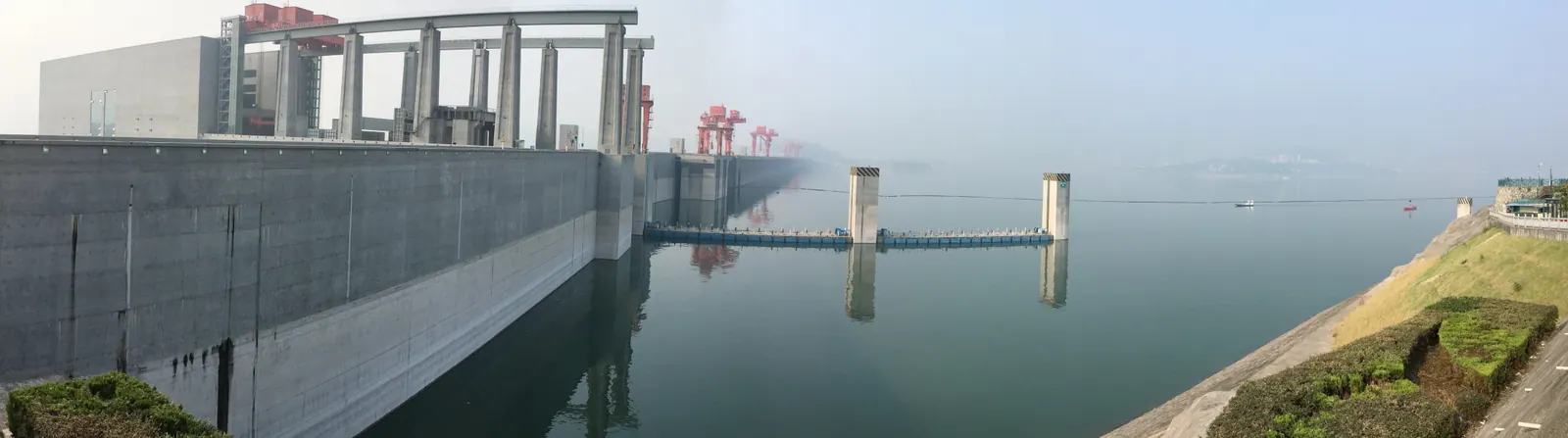
Yichang (宜昌) sits where the Yangtze emerges from the mountains into the plains, the traditional gateway to the Three Gorges. The Three Gorges (三峡) run from Chongqing's Baidicheng to Yichang's Nanjinguan — Qutang, Wu and Xiling gorges — and the easternmost, Xiling Gorge (西陵峡), lies entirely within Hubei, its cliffs and small side-valleys the most scenic stretch of the river's middle course. The modern headline is the Three Gorges Dam (三峡大坝), the world's largest hydropower project: a wall of concrete 2.3 kilometers across and 185 meters high, holding back a reservoir hundreds of kilometers long, which visitors tour from a purpose-built visitor center on a hill above the river. The quieter draw is the gorge itself: the Three Gorges Family scenic area (三峡人家) with its stilt houses and fishermen's boats, the small craft that thread the tributary valleys, and the poet Qu Yuan's hometown at Zigui just upstream. For many travelers the classic move is the multi-day Yangtze cruise from Chongqing down to Yichang — but a day at the dam plus a boat into Xiling Gorge gives the essence without the cabin, and Yichang itself is a pleasant, walkable city with a good riverside promenade and the Gezhouba Dam just downstream.

Three Gorges Dam visitor centerXiling Gorge boat tripThree Gorges Family scenic areaGezhouba Dam

Standing at the dam's overlook, the scale is hard to process — a wall of concrete holding back a reservoir hundreds of kilometers long, with the misty Xiling Gorge stretching beyond it. The smaller boat trip into the gorge was the emotional highlight: cliffs rising straight from green water, a few stilt houses, and a fisherman's boat that felt like a scene from a scroll painting. Yichang itself surprised us — a clean, walkable city with a long riverside promenade where families flew kites at dusk. The honest verdict: the dam is a box-tick for many, but the gorge around it is the real reward, and it is easy to underestimate how much time the dam tour, the shuttles and the security checks actually take — budget a full half-day for the dam alone.

Best for

Engineering enthusiasts, cruise travelers, river-and-canyon scenery seekers

Eat this

Three Gorges fish hotpot (三峡鱼火锅), Liangxia (凉虾)

Climate, transport, stay & a day plan

Climate

Subtropical, 4-10°C in winter and 26-36°C in summer; the gorge is greenest in spring and clearest in autumn

How to get there

Yichang is the river-and-rail gateway to western Hubei, on the Shanghai-Chengdu high-speed line.

Train: High-speed rail from Wuhan (2h, CNY 100-150) and Chongqing (4h). Yichang East station connects to the dam by bus or taxi.

Flight: Yichang Sanxia Airport has domestic flights from major cities; the dam and gorge are reached by road.

Where to stay

Yichang city hotels (CNY 200-500) - Riverside and city-center stays near the promenade, the practical base for the dam and gorge.

Xiling Gorge lodges (CNY 250-600) - Scenic-area stays with river views, quieter than the city and closer to the gorge boat trips.

Know before you go

The dam is a half-day commitment: The visitor area involves shuttles and security checks. Budget at least half a day, and book the free dam tour in advance through the official channel or a local tour.

Cruises are seasonal: Yangtze cruises run mostly March to November. If you want the Chongqing-Yichang cruise, book ahead in autumn when water levels are high.

A sample day 1

  • -Morning: Three Gorges Dam visitor center
  • -Afternoon: boat into Xiling Gorge
  • -Evening: Yichang riverside promenade
Shennongjia 神农架, Hubei
2 to 3 days

Shennongjia 神农架

Shennongjia Forest District · western Hubei

A primeval forest of golden monkeys and 'wild man' legend

Shennongjia (神农架) is the wildest corner of Hubei — a forest district, not a city, spanning the highest peaks of the Daba Mountains. It is the only site in China to hold all three UNESCO designations (World Heritage, Global Geopark, Man and Biosphere Reserve), and its centerpiece, Shennong Peak (神农顶), reaches 3,106m, earning it the title 'roof of central China'. The draw is the dense, damp primeval forest: the Dajiu Lake wetland (大九湖), a chain of highland lakes wrapped in morning mist where deer graze; the boardwalks through old-growth fir, rhododendron and bamboo; and the golden snub-nosed monkeys (金丝猴) that live here and nowhere else on Earth. The region's most famous story is the yeren (野人), the 'wild man' of Shennongjia, a local legend of a large, human-like creature that has fueled expeditions and a museum for decades. The forest also carries the name of Shennong, the mythical farmer-emperor said to have gathered herbs here. Come for the forest and the wildlife; treat the wild-man story as folklore with a gift shop. The sights are spread far apart — Shennong Peak, the monkey reserve and Dajiu Lake each need a drive — so a private driver or a joined tour is effectively required, and the reward is a China most foreigners never see.

Shennong Peak (3,106m)Dajiu Lake wetlands at sunriseGolden snub-nosed monkeysOld-growth forest boardwalks

The drive into Shennongjia is half the experience: the road climbs through switchbacks until the air turns cool and the forest closes over the road, and you understand why this place bred a wild-man legend. We walked the Dajiu Lake boardwalk at dawn as mist sat on the water and a herd of deer moved through the grass, and it felt like a different country entirely — cold, quiet, and green in a way the cities never are. The golden monkeys were the other highlight: feeding groups that tolerated our presence from a respectful distance, their blue faces and gold coats absurdly vivid against the fog. The honest caveat: Shennongjia is not a day trip, and it is not for the mobility-limited. Distances between viewpoints are long, the weather changes fast, and you will want a private driver (CNY 400-600 per day) or a joined tour to make sense of it.

Best for

Nature lovers, hikers, wildlife watchers, anyone seeking China's least-known UNESCO forest

Eat this

Wild mushroom hotpot (野菌火锅), Shennongjia cured pork (腊肉)

Climate, transport, stay & a day plan

Climate

Cool highland forest, 10-24°C in summer, below freezing in winter; wet and misty, with the clearest skies in autumn

How to get there

Shennongjia is in far western Hubei, reached by road from Yichang or Shiyan — there is no direct rail.

Train: No rail to the forest. Take a train to Yichang or Shiyan, then a bus or private car (3-4 hours) to the scenic area.

Flight: Shennongjia Hongping Airport has limited flights from Wuhan; most travelers drive or bus from Yichang.

Where to stay

Muyu town hotels (CNY 200-500) - The main base village, with the widest choice of hotels and restaurants and easy access to the forest.

Dajiu Lake guesthouses (CNY 250-600) - Stays near the wetland for the sunrise, often with family-run kitchens serving wild-mushroom hotpot.

Know before you go

You need a car or tour: Shennongjia's sights are far apart and public transport is thin. Budget for a private driver (CNY 400-600/day) or join a tour from Yichang or Shiyan.

The 'wild man' is folklore: Enjoy the museum and the story, but there is no confirmed yeren. The real draw is the forest and the monkeys.

A sample day 1

  • -Drive in from Yichang, Shennong Peak viewpoint
  • -Afternoon: golden monkey reserve
  • -Overnight near Dajiu Lake

A sample day 2

  • -Dawn: Dajiu Lake boardwalk
  • -Late morning: old-growth forest trails, then depart
Jingzhou Ancient City 荆州古城, Hubei
1 day (half day for the wall and museum)

Jingzhou Ancient City 荆州古城

Central Hubei · Yangtze River

The walled city of Chu culture and the Three Kingdoms

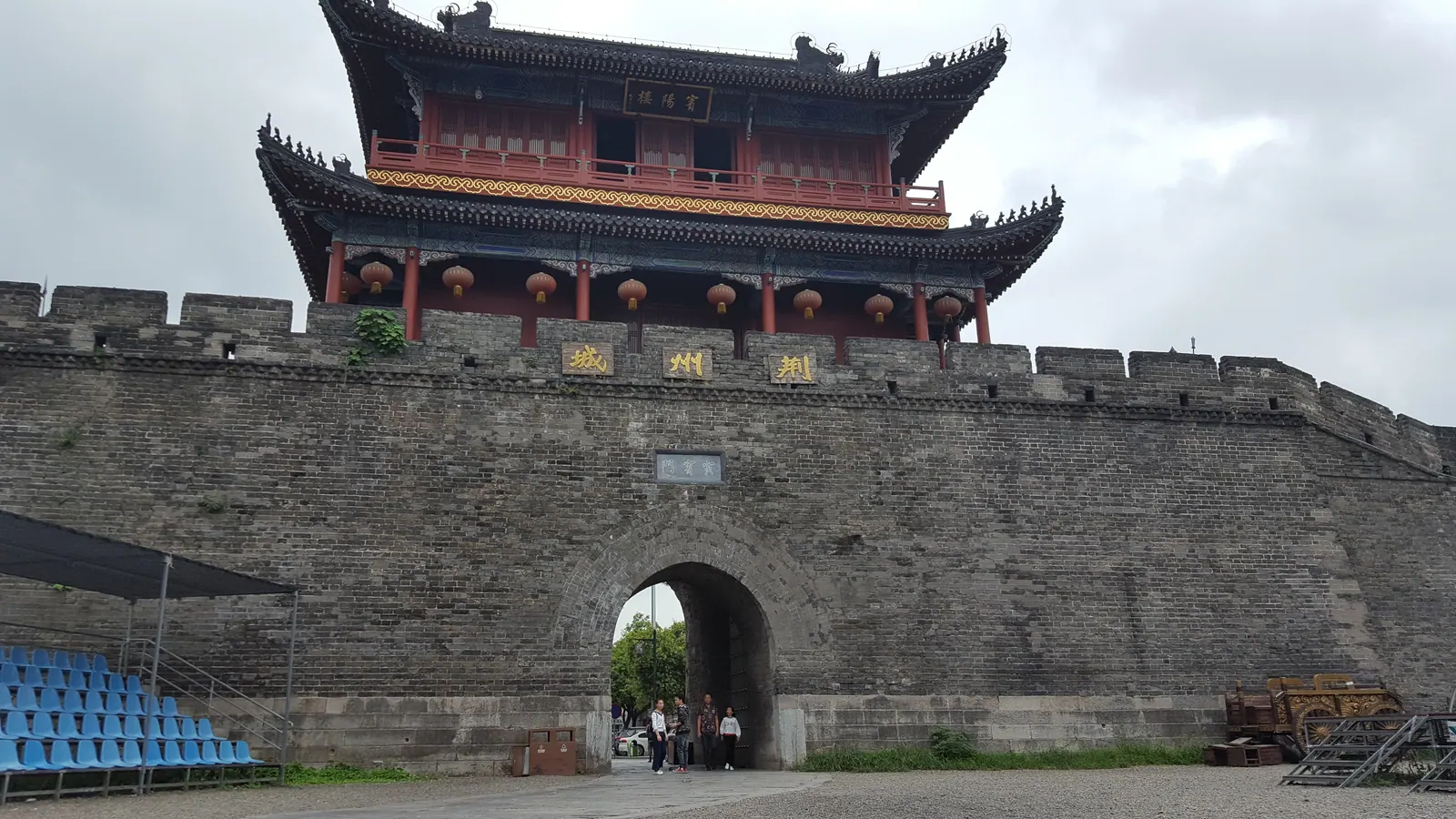
Jingzhou (荆州) is the cultural heart of Hubei — a walled city on the Yangtze that was the capital of the ancient Chu state and a pivotal battleground in the Three Kingdoms era. Its Ming-dynasty city wall, among the best-preserved in southern China, still rings the old town for over 10 kilometers, and you can walk the ramparts above the gates, looking down on moats and gate towers that have guarded the city for centuries. The Jingzhou Museum (荆州博物馆) is the reason history lovers stop here: it holds a Western Han mummy among the best-preserved ancient corpses in China, plus bronzes, lacquerware and silk from the Chu kingdom that rival the provincial museum in Wuhan — and it is far less crowded. The nearby Xiongjia Tomb and the Jinan City ruins of the Chu capital add depth for the archaeology-minded. Jingzhou is also Guan Yu's city: the Shu general was tasked with defending it before his death, and his cult is everywhere, from the Guandi Temple to statues by the river. For readers of the Romance of the Three Kingdoms, Jingzhou is where the story's middle act turns, and the city leans into it. It is a quieter, more human-scaled stop than Wuhan — best as a half-day to full-day detour on the Wuhan-Yichang rail line rather than a base.

Ming city wall and gatesJingzhou Museum (Western Han mummy, Chu artifacts)Guandi Temple (Guan Yu)Jinan City ruins of the Chu capital

Walking the top of Jingzhou's wall at dusk, with the Yangtze beyond the gates, was a quiet highlight — far fewer crowds than Xi'an's wall and just as atmospheric, the ramparts empty but for a few locals walking dogs. The museum punched far above its city's size: the Western Han mummy and the Chu lacquerware and silk are world-class, and we had whole galleries nearly to ourselves, which is rare for treasures this important. The Three Kingdoms connection is everywhere if you know the story, which makes it satisfying for readers of the Romance and slightly inscrutable if you do not. A half day is enough for most; a full day if you linger over the bronzes and the wall walk.

Best for

History and Three Kingdoms fans, museum lovers, travelers wanting a slower, walled city

Eat this

Fish cake (鱼糕), Gong'an guokui (公安锅盔)

Climate, transport, stay & a day plan

Climate

Subtropical, 3-10°C in winter and 27-36°C in summer; humid, with the mildest weather in spring and autumn

How to get there

Jingzhou sits on the Yangtze and the Wuhan-Yichang high-speed line, an easy stop between the two.

Train: High-speed rail from Wuhan (1h, CNY 60-90) and Yichang (40min). The station connects to the old town by bus or taxi.

Flight: Jingzhou Shashi Airport has limited flights; most travelers arrive by rail from Wuhan or Yichang.

Where to stay

Old-town hotels (CNY 150-350) - Stays inside or near the walled city, walking distance to the museum and the gates.

Riverside hotels (CNY 200-450) - Modern stays along the Yangtze, quieter and with river views.

Know before you go

It is a half-day stop, mostly: Unless you are a serious Three Kingdoms or archaeology enthusiast, Jingzhou fits neatly as a stop on the Wuhan-Yichang rail line rather than a base.

The wall is best at dusk: Midday summer heat on the wall is punishing. Go early or late, and carry water — the ramparts offer little shade.

A sample day 1

  • -Morning: Jingzhou Museum (Chu bronzes, Western Han mummy)
  • -Afternoon: walk the city wall and the Guandi Temple
  • -Evening: fish cake dinner, then onward by rail

Southwest · Enshi

The Colorado-style canyon and Tujia culture

Enshi Grand Canyon 恩施大峡谷, Hubei
2 to 3 days

Enshi Grand Canyon 恩施大峡谷

Enshi Tujia & Miao Prefecture · southwest Hubei

China's answer to the Colorado Grand Canyon, plus Tujia culture

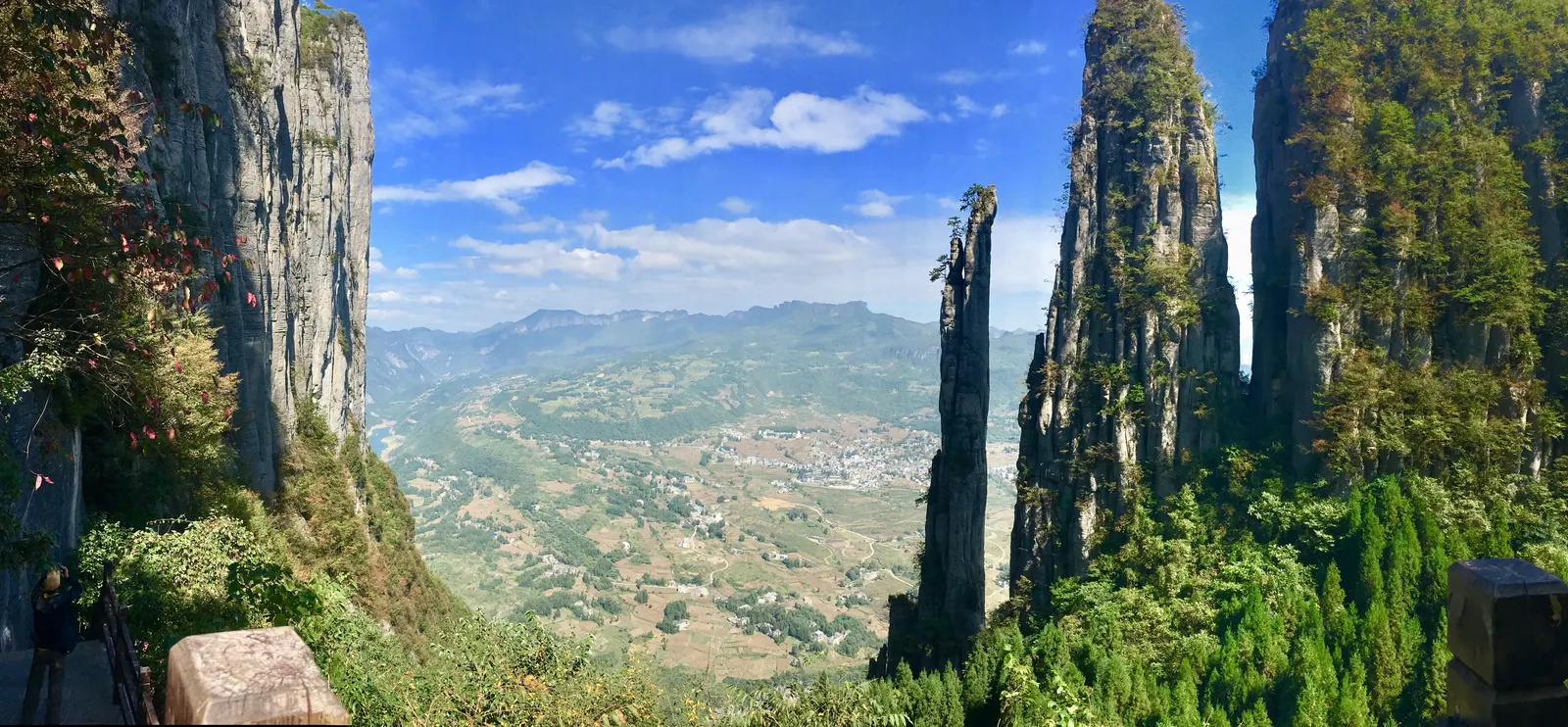
Enshi (恩施) in southwest Hubei is the province's most underrated region: a karst landscape of canyons, stone forests and underground rivers, home to the Tujia and Miao peoples. Its centerpiece is the Enshi Grand Canyon (恩施大峡谷), a limestone gorge often compared to the Colorado Grand Canyon for its depth, cut by the Qingjiang River. Its signature is the One Pillar of Fragrance (一炷香), a stone column that rises about 150 meters from the canyon floor, so slender it looks as if it might fall. The walking route climbs thousands of steps to a cliffside boardwalk that traces the rim, then descends into the Yunlong Ground Fissure (云龙地缝), a deep, narrow cleft with waterfalls and a turquoise stream at the bottom. Nearby, the Qingjiang Gallery (清江画廊) threads clear green water through limestone walls on a slow boat ride, and the Tenglong Cave (腾龙洞) near Lichuan is one of Asia's largest cave systems, vast enough that it once hosted helicopters and now stages light-and-dance shows. The Suobuya Stone Forest (梭布垭石林) is a fossil-rich Ordovician stone forest. Culture is the second layer: the Tujia people's stilt houses, the Enshi Tusi Castle (土司城) built in the style of the old Tujia chieftains, and the Dragon Boat Melody (龙船调), a Tujia folk song famous across China. This is frontier Hubei — slower, greener and more raw than the polished east, with far fewer foreign visitors and far less English.

Enshi Grand Canyon and the One Pillar of FragranceQingjiang Gallery boat tripTenglong CaveSuobuya Stone Forest

The Enshi Grand Canyon is a leg-burner: we climbed thousands of steps to reach the cliff paths, then walked the ridgeline past the One Pillar of Fragrance as clouds filled the gorge below. It genuinely earns the Colorado comparison, though it is greener and wetter, and the pillar is more surreal in person than any photo suggests. The Qingjiang boat trip the next day was the calm counterpoint — two hours of limestone walls sliding past with barely another boat on the water, and a Tujia boatman singing a song in the distance. Enshi is not polished, and English is scarce, but it is the Hubei most foreigners miss entirely, and that is precisely its appeal. Bring grippy shoes, water, and a tolerance for thousands of stairs — the canyon is a full day and the descent into the fissure is as steep as the climb up.

Best for

Hikers, photographers, canyon and cave enthusiasts, travelers seeking China beyond the postcards

Eat this

Hezha (合渣), Kang potatoes (炕土豆), Tujia cured meat (土家腊肉)

Climate, transport, stay & a day plan

Climate

Mountain subtropical, 8-28°C; wet and green in spring, clearest in autumn. Summer brings afternoon rain

How to get there

Enshi is southwest Hubei, on the Shanghai-Chengdu high-speed line, a long but easy ride from Wuhan.

Train: High-speed rail from Wuhan (3.5h, CNY 200-280) and Chongqing (2.5h). The canyon is then 1-1.5 hours by bus or car from Enshi city.

Flight: Enshi Xujiaping Airport has domestic flights from Wuhan and a few major cities.

Where to stay

Enshi city hotels (CNY 150-350) - Practical bases near the rail station, the hub for day trips to the canyon and the Qingjiang Gallery.

Canyon-area guesthouses (CNY 200-500) - Stays near the canyon entrance, useful for an early start before the tour groups arrive.

Know before you go

The canyon is a full day of stairs: Allow 5-6 hours and bring water and grippy shoes. The cliffside sections are not for anyone with vertigo or weak knees.

Little English, fewer tourists: Enshi is far less tourist-facing than Wuhan or Yichang. Carry an offline translation app, cash and saved screenshots of addresses.

A sample day 1

  • -Morning: Enshi Grand Canyon (cliff paths and One Pillar of Fragrance)
  • -Evening: Enshi city, hezha and kang potatoes

A sample day 2

  • -Morning: Qingjiang Gallery boat trip
  • -Afternoon: Tenglong Cave or Suobuya Stone Forest

The at-a-glance decision table

Direction, days, daily budget and who it suits, in one table. If you only read one thing, read this.

Destination Direction Stay Daily budget Best for
Wuhan 武汉 East 2 to 3 days CNY 300+ First-time visitors, history and museum lovers, food travelers, city-break travelers
Wudang Mountains 武当山 Northwest 1 to 2 days (overnight to catch sunrise) CNY 300+ Taoism and martial-arts fans, hikers, culture seekers, anyone who wants Shaolin's quieter sibling
Shennongjia 神农架 West 2 to 3 days CNY 350+ Nature lovers, hikers, wildlife watchers, anyone seeking China's least-known UNESCO forest
Yichang & Three Gorges 宜昌三峡 West 1 to 2 days CNY 300+ Engineering enthusiasts, cruise travelers, river-and-canyon scenery seekers
Enshi Grand Canyon 恩施大峡谷 Southwest 2 to 3 days CNY 250+ Hikers, photographers, canyon and cave enthusiasts, travelers seeking China beyond the postcards
Jingzhou Ancient City 荆州古城 West 1 day (half day for the wall and museum) CNY 250+ History and Three Kingdoms fans, museum lovers, travelers wanting a slower, walled city
Xiangyang 襄阳 Northwest 1 day (Longzhong plus the wall) CNY 250+ Three Kingdoms devotees, history travelers, food travelers chasing the beef noodles
Chibi 赤壁 Southeast 1 day (battlefield plus the hot springs) CNY 250+ Three Kingdoms pilgrims, hot-spring fans, travelers wanting a quiet Yangtze stop

Daily budgets are mid-range per person, excluding the Three Gorges cruise and Wudang cable car. See the calculator below for a full estimate.

Pick your days, see the route

Start in Wuhan and work west. Four lengths, from a city weekend to the full loop.

3-day trip · The capital, done properly

Wuhan in a long weekend

CNY 1,500

Wuhan only

  • Day 1: Yellow Crane Tower, Hubei Provincial Museum (chime bells)
  • Day 2: East Lake and Moshan by bike, Hankou riverfront
  • Day 3: guozao breakfast crawl, Yangtze River Bridge, depart

Short trips, first-time visitors, food travelers · roughly CNY 1,500 mid-range, before the big extras

5-day trip · City energy, then Taoist mountain calm

Wuhan plus Wudang

CNY 2,600

Wuhan > (rail) > Wudang Mountains

  • Days 1-2: Wuhan (tower, museum, East Lake, guozao)
  • Day 3: train to Wudang, Golden Hall and Nanyan Palace
  • Day 4: Purple Cloud Palace, Prince Slope, tai chi at dawn
  • Day 5: return via Wuhan or Shiyan

Culture and martial-arts fans, first-timers wanting one mountain · roughly CNY 2,600 mid-range, before the big extras

7-day trip · Wuhan, Wudang and the Three Gorges

The Hubei classics

CNY 3,600

Wuhan > Xiangyang > Wudang > (rail) > Yichang

  • Days 1-2: Wuhan (tower, museum, East Lake)
  • Day 3: Xiangyang (Longzhong, beef noodles), then Wudang
  • Day 4: Wudang Mountains
  • Day 5: train to Yichang, Three Gorges Dam
  • Day 6: Xiling Gorge boat trip, Jingzhou wall en route
  • Day 7: depart from Wuhan

The complete first-trip picture, history and engineering · roughly CNY 3,600 mid-range, before the big extras

10-day trip · Add Shennongjia and Enshi

The full Hubei loop

CNY 5,200

Wuhan > Xiangyang > Wudang > Shennongjia > Yichang > Enshi

  • Days 1-2: Wuhan
  • Day 3: Xiangyang and Wudang
  • Day 4: Wudang Mountains
  • Day 5: drive to Shennongjia, golden monkeys
  • Day 6: Dajiu Lake at dawn, then to Yichang
  • Day 7: Three Gorges Dam and Xiling Gorge
  • Days 8-9: Enshi Grand Canyon and Qingjiang Gallery
  • Day 10: depart from Enshi or return to Wuhan

Slow travelers and repeat China visitors who want the wild west of Hubei · roughly CNY 5,200 mid-range, before the big extras

What will it cost?

Pick a comfort level and a length, add the big-ticket extras, and get a per-person estimate in seconds.

Comfort level

Trip length

7 days

3 days 14 days

Add the big-ticket extras

Estimated per person

CNY 3,850

Based on mid-range at CNY 550/day over 7 days, plus your extras.

Excludes international flights to China. Prices are 2026 averages and move with the season.

What the big items cost

The handful of fixed costs that drive most of a Hubei budget. 2026 prices, per person.

Cruises and boats

  • Three Gorges cruise (3-4 nights) CNY 800-1,500+
  • Xiling Gorge boat trip CNY 150-250
  • Qingjiang Gallery boat (Enshi) CNY 150-200
  • Yangtze night cruise (Wuhan) CNY 120

Entry tickets

  • Yellow Crane Tower CNY 70
  • Wudang Mountains (scenic area) CNY 240
  • Shennongjia (Shennong Peak) CNY 130
  • Enshi Grand Canyon CNY 155
  • Hubei Provincial Museum Free

Transport

  • Wudang cable car (round trip) CNY 150
  • Wuhan-Yichang high-speed rail CNY 100-150
  • Wuhan-Shiyan (Wudang) rail CNY 150-200
  • Private driver (Shennongjia/Enshi) CNY 400-600/day

Hubei or Hunan?

The honest split between central China's two neighbors.

Choose Hubei if...

  • Compact: Wuhan, Wudang, the Three Gorges and Enshi on one rail spine
  • Three Kingdoms history: Chibi, Jingzhou, Xiangyang and Longzhong
  • Taoist Wudang, the cradle of tai chi
  • The Three Gorges Dam and the Yangtze
  • Wuhan's guozao breakfast: hot dry noodles and doupi

Choose Hunan if...

  • Zhangjiajie's sandstone pillars and the glass bridge
  • Spicier, bolder Hunan cuisine and Changsha's night markets
  • The ancient town of Fenghuang (Phoenix)
  • Mao Zedong's hometown at Shaoshan
  • Slightly further spread; rail still connects it well

The short answer: choose Hubei for history, Wudang and the Three Gorges; Hunan for Zhangjiajie and spicier food. They are neighbors — Wuhan and Changsha are 1.5 hours apart, so you can do both.

Guozao: how Wuhan wakes up

Guozao (过早) means "pass the morning" — Wuhan eats breakfast fast, standing, on the street. The most distinctive thing about Hubei.

1

5:00 AM

The stalls fire up

Sesame paste is mixed, noodles are boiled and drained, and the first steam rises over the street before the city wakes.

2

6:30 AM

The rush begins

Office workers, students and taxi drivers queue at plastic stools. A bowl is ordered, mixed and finished in three minutes — standing up.

3

9:00 AM

The stalls start to close

Guozao is a morning ritual, not an all-day meal. The best stalls sell out and pack up by mid-morning.

Mix it fast

Hot dry noodles come with the sauce on top. Stir hard immediately so every strand gets coated before the paste thickens — that is the whole skill.

Stand, don't sit

The plastic stools and paper bowls are the point. Wuhan eats breakfast on its feet or perched on a stool; a table seat is optional.

Order the set

Hot dry noodles + a cup of soupy rice wine (蛋酒) or a bowl of hufen soup. That is a complete guozao breakfast.

Say 微辣

Ask for 微辣 (mild) on your first bowl. The chili oil is easy to over-order, and you can always add more.

Where to do it: the tourist answer is Hubu Lane, but the real guozao is on the back streets of Hankou — Liangdao Street and the lanes around Shanhaiguan Road. Follow the longest queue, eat standing, and be done before 9 AM. That is the whole ritual.

Ten dishes worth planning around

Lotus root and river fish from a thousand lakes. The full menu, city by city.

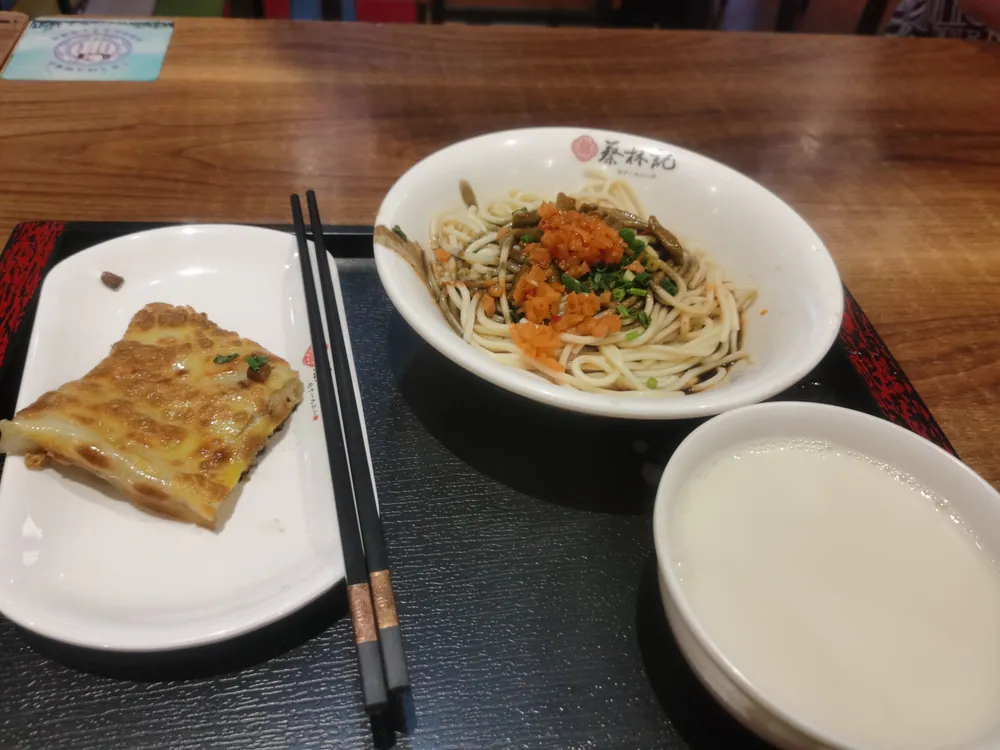
Hot dry noodles with doupi, a classic Wuhan guozao breakfast
01

Hot dry noodles 热干面 (ruh gan mee-en)

CNY 6-10

Wuhan

The guozao icon: alkaline noodles in sesame paste, soy and chili. See the guozao section above for the full ritual.

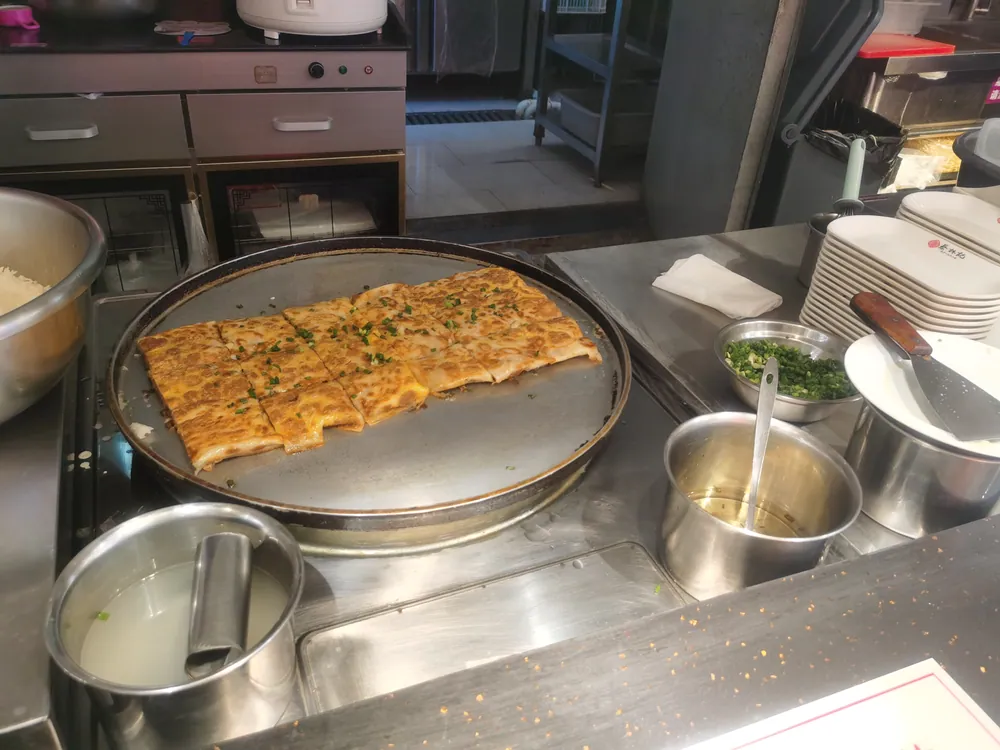
Doupi cooking on a flat pan in a Wuhan kitchen
02

Doupi 豆皮 (doh-pee)

CNY 8-15

Wuhan

A pan-fried square of sticky rice, egg and bean skin with minced pork and bamboo shoot. Crisp outside, soft inside.

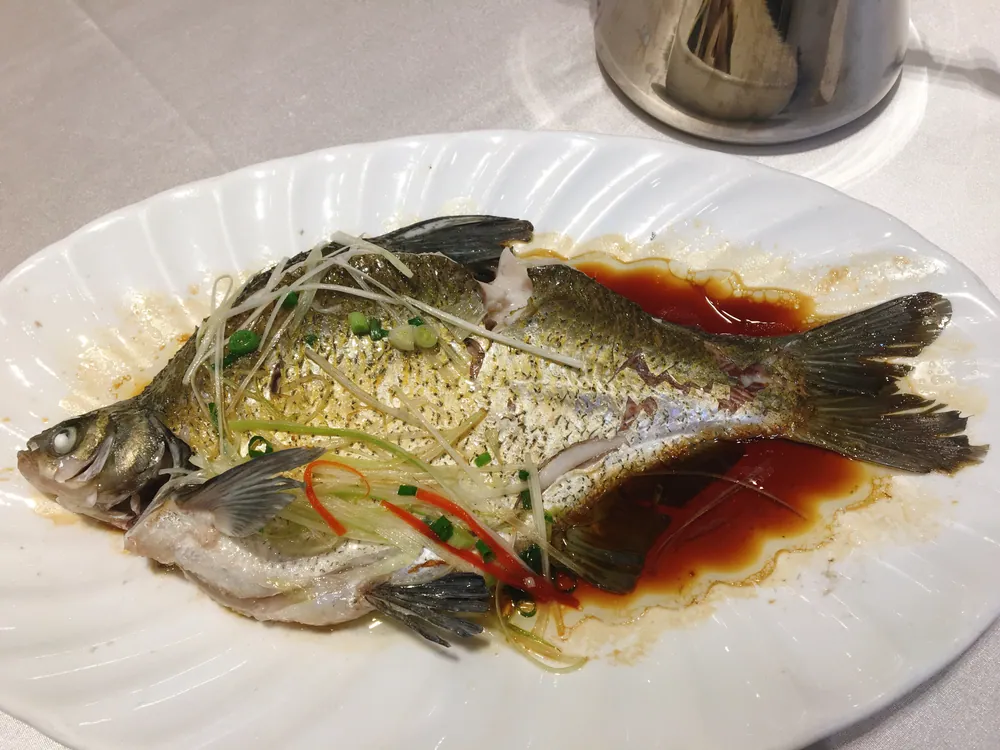
Steamed Wuchang bream on a serving plate
03

Wuchang fish 武昌鱼 (woo-chahng yoo)

CNY 60-120

Wuhan

A freshwater bream from the Yangtze, steamed with ginger and scallion. The dish to order for a sit-down dinner.

Packaged braised duck necks, the Wuhan snack staple
04

Duck neck 鸭脖 (yah bwoh)

CNY 20-40

Wuhan

Spiced, braised duck neck — the snack Wuhan snacks on all day. Zhouheiya and Jingwu are the trusted brands.

05

Lotus root & rib soup 排骨藕汤 (pai-goo oh tahng)

CNY 30-60

Hubei

Pork ribs simmered with the 'thousand lakes' lotus root. Hubei's comfort-food signature.

06

Crayfish 小龙虾 (shyao-long-shyah)

CNY 80-150

Qianjiang · summer

Hubei is China's crayfish capital, and Qianjiang's are the reference. Steamed or spicy, from May to September.

07

Jingzhou fish cake 鱼糕 (yoo gao)

CNY 30-60

Jingzhou

Pounded freshwater fish steamed into a soft cake, served in soup or stir-fried. Delicate and unlike anything in Wuhan.

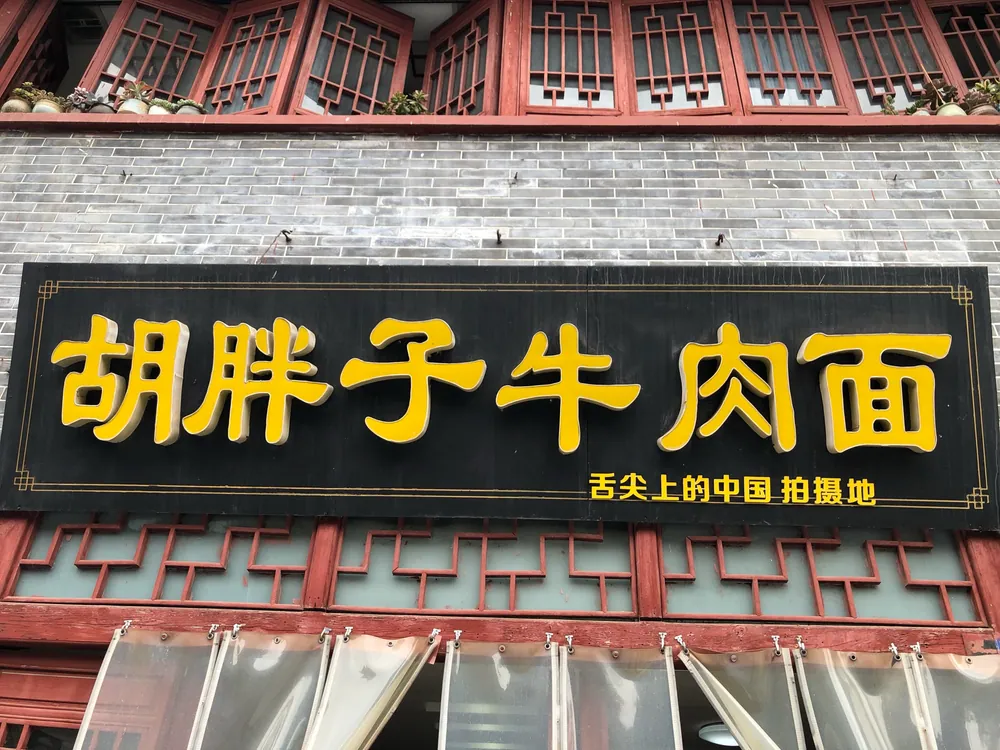
A bowl of spicy Xiangyang beef noodles
08

Xiangyang beef noodles 襄阳牛肉面 (shyahng-yahng nyoh-roh mee-en)

CNY 10-20

Xiangyang

Hand-pulled noodles in a rich, spicy beef broth. The city's breakfast, worth the stop alone.

09

Three Gorges fish hotpot 三峡鱼火锅 (sahn-shyah yoo hwoh-gwoh)

CNY 80-160

Yichang

Fresh Yangtze fish simmered in a clear or spicy broth. Order the clear broth to taste the fish.

10

Hezha 合渣 (huh jah)

CNY 15-30

Enshi

A Tujia staple: pounded soybeans cooked with greens. Cheap, filling and the taste of Enshi's countryside.

What to eat in each city
City Eat this
Wuhan Hot dry noodles, doupi, Wuchang fish, duck neck, lotus root & rib soup, crayfish in summer
Yichang Three Gorges fish hotpot, liangxia (凉虾) sweet rice drink
Enshi Hezha, kang potatoes (炕土豆), Tujia cured meat
Jingzhou Fish cake, Gong'an guokui stuffed flatbread
Xiangyang Beef noodles, yellow rice wine
Qianjiang & Xianning Crayfish (summer), Chibi fish balls, bamboo-shoot dishes
Dietary notes: vegetarian, halal, spice and safety

Vegetarian and vegan

Possible but plan ahead. Lotus-root and vegetable dishes are common, and tofu (including Wuhan's doupi and Enshi's hezha) is everywhere. Carry a note saying 我吃素 (I eat vegetarian).

Halal

Halal restaurants exist in Wuhan, marked with a green 清真 sign, and in other larger cities. In small towns, stick to vegetable and egg dishes and ask about the broth.

Spice level

Hubei food is savory and rich more than numbingly spicy, though Xiangyang beef noodles and crayfish carry real heat. Ask for 微辣 (mild) or 不辣 (no chili) on your first bowl.

Allergies and safety

Peanuts, sesame, seafood and gluten are common. Sesame paste is the base of hot dry noodles. A printed allergy card helps where English is thin.

The thousand lakes, on a plate

The 湖 (hú) in Hubei means "lake" — and the province eats what its water grows. The lake-to-table map.

Hong Lake 洪湖

Jingzhou · eastern Hubei

Lotus root

Pork rib & lotus-root soup (排骨藕汤)

Hong Lake is Hubei's largest lake and China's most famous lotus-root region. The starchy root goes into the province's comfort-food signature — ribs simmered with lotus root until both turn soft and sweet.

Qianjiang 潜江

Central Hubei

Crayfish (xiaolongxia)

Oily-braised crayfish (油焖大虾)

Qianjiang is China's crayfish capital. From May to September its crayfish — steamed plain or oily-braised with chili and garlic — are the reference standard for the whole country.

Liangzi Lake 梁子湖

Wuhan · Ezhou

Wuchang fish & hairy crab

Steamed Wuchang fish (清蒸武昌鱼)

Liangzi Lake is the original home of the Wuchang fish (blunt-snout bream), steamed with ginger and scallion, and of Hubei's own hairy crab in autumn. The fish famous since the Three Kingdoms comes from here.

The Three Gorges & Qingjiang 三峡 · 清江

Yichang · Enshi

River fish

Three Gorges fish hotpot (三峡鱼火锅)

The clear mountain waters of the Qingjiang and the Yangtze's gorges hold Hubei's freshest river fish, simmered in a clear broth so you taste the fish, not the chili.

The taste of Hubei in one line: Hunan is fiery, Sichuan is numbing — Hubei is fresh. Lotus root and river fish from a thousand lakes are the common thread under every dish above, and it is the one flavor the province has that its neighbors do not.

What to bring home

Hot-dry-noodle packs, duck neck, lotus products and tea — Hubei's souvenirs are better than fridge magnets. Here is what to buy and where.

Instant hot dry noodles 热干面速食包

CNY 8-15/pack

The easiest souvenir to love. Buy a few brands at any Wuhan supermarket and compare the sesame sauce at home.

Duck neck (Zhouheiya / Jingwu) 鸭脖

CNY 20-60

Vacuum-packed spiced duck neck travels well and is the taste of Wuhan. Zhouheiya and Jingwu are the trusted brands.

Xiaogan sesame candy 孝感麻糖

CNY 15-40

A crisp sesame and maltose candy from Xiaogan, sweet and nutty. A classic Hubei gift that keeps for weeks.

Honghu lotus products 洪湖莲藕

CNY 30-100

Dried lotus root, lotus-seed paste and lotus-root starch (藕粉) from the 'thousand lakes'. The edible symbol of Hubei.

Enshi Yulu tea 恩施玉露

CNY 100-500

A steamed green tea from Enshi, one of China's rare steam-fixed teas. Buy loose from a tea shop that lets you taste first.

Wudang Taoist tea 武当道茶

CNY 50-200

Green tea grown on the Wudang slopes, sold at tea houses near the temples. Light and fragrant.

Shopping tips
  • Supermarkets (Walmart, RT-Mart) are the best place for hot-dry-noodle packs, duck neck and sesame candy at local prices.
  • For Enshi Yulu and Wudang tea, go to a specialist tea shop and taste before you buy — never from scenic-spot stalls.
  • Bargain politely at markets, but expect fixed prices in shops. Start around 70% of the asking price in tourist areas.
  • Check airline rules before buying liquids (rice wine, chili oil) or large loose-tea bags.
  • Duck neck and instant noodles are fine in checked luggage; fresh lotus root is not — stick to the dried and vacuum-packed versions.

When to go

Spring and autumn are the sweet spots; summer for the mountains, winter for the cities.

Spring

Best

Apr–May

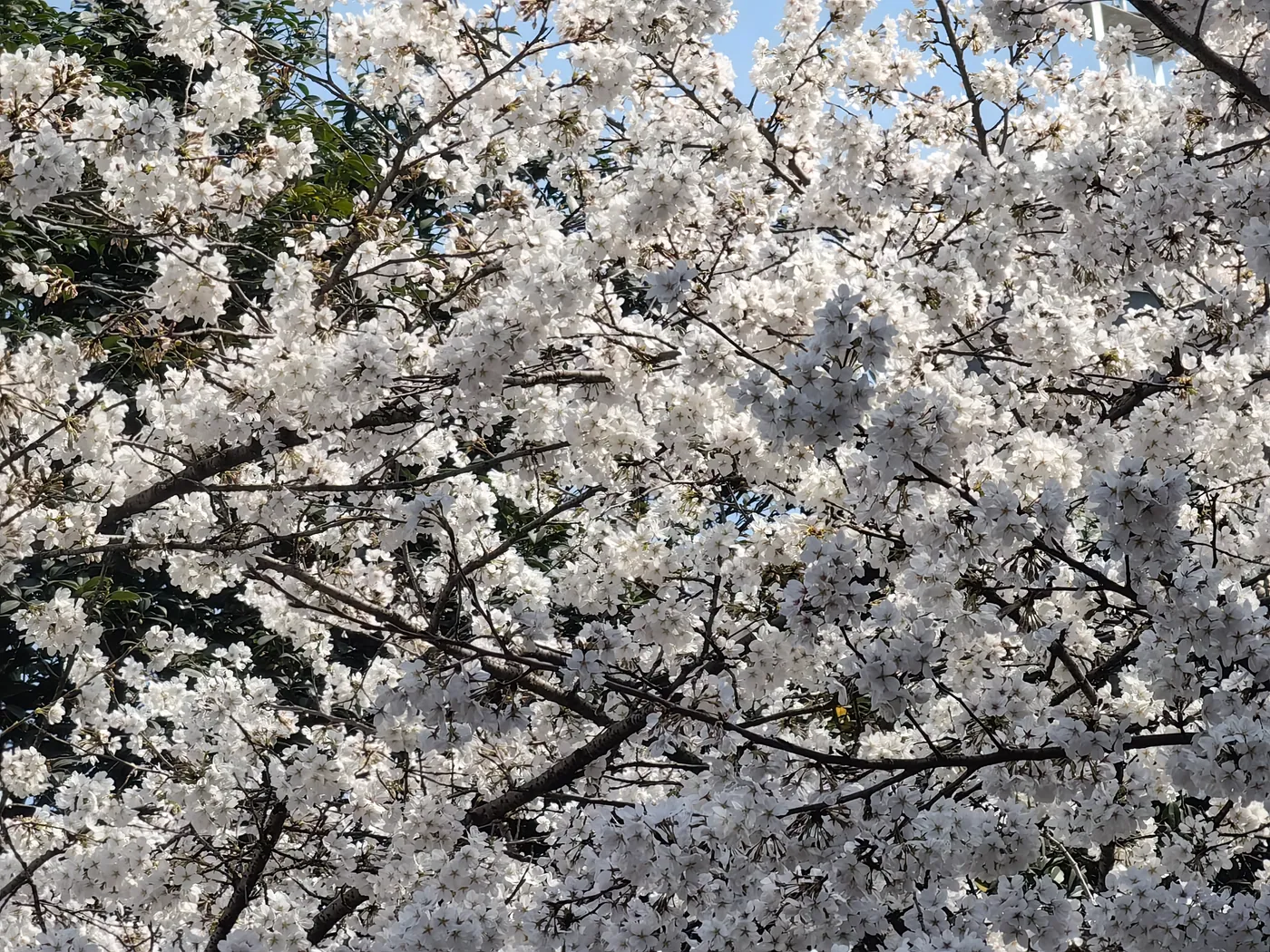
Mild and green. Wuhan's cherry trees bloom, and the mountains are lush without the summer heat.

Autumn

Best

Sep–Nov

Clear skies and crisp air — the clearest views of the gorges and Shennongjia's forests. October is peak.

Summer

Avoid

Jul–Aug

Wuhan hits 36-40°C. The mountains (Shennongjia, Enshi) are the escape, and it is crayfish season.

Winter

Avoid

Dec–Feb

Cold and damp, but fine for museums, hot springs and the cities. Wudang can see snow.

Hubei weather, month by month

The mountains run 10-15°C cooler than Wuhan. Month by month, what to do in each.

Month Wuhan & lowlands Mountains (Wudang, Shennongjia, Enshi) What to do
January 2–8°C, damp cold Below freezing, Wudang can see snow Museums, hot springs, cities. Quiet and cheap.
February 4–10°C, damp Cold, occasional snow Hot springs, museums. Spring Festival if it falls here.
March 8–16°C, warming Chilly but thawing Wuhan cherry blossoms begin late March.
April 13–22°C, mild 8–18°C, green Peak season — cherry blossom, East Lake, the gorges.
May 18–27°C, pleasant 12–22°C, lush Yangtze cruise season opens. Great all-round month.
June 23–31°C, plum rains 15–25°C, humid Crayfish season. Three Gorges at full flow.
July 26–36°C, furnace 18–28°C, cool escape Flee the heat to Shennongjia and Enshi.
August 26–36°C, furnace 18–28°C, cool Mountain escape, crayfish, waterfalls.
September 21–31°C, easing 14–24°C, crisp Peak season returns. Clear skies over the gorges.
October 15–25°C, perfect 8–18°C, crisp The best month. Book the cruise and Wudang ahead.
November 8–18°C, cool 3–12°C, frosty nights Shennongjia autumn color, Three Kingdoms sites.
December 3–10°C, cold Below freezing Hot springs, museums, quiet cities.

Temperatures are typical ranges. The mountains (Shennong Peak 3,106m, Wudang 1,612m) run 10-15°C cooler than Wuhan in summer.

Weather and what to pack

What to wear each season, and what to throw in the bag.

Spring

15-25°C

March to May

Wear: Light layers and a light rain jacket. Spring is mild but changeable, with occasional rain and the tail of the winter damp.

One of the two best windows. Wuhan's cherry and plum trees bloom, and the mountains turn green.

Summer

28-40°C

June to August

Wear: Breathable, quick-dry clothes, sunscreen, a hat and a lot of water. Wuhan is a 'furnace', and afternoon thunderstorms are common.

The hottest season. Head to Shennongjia and Enshi for cooler mountain air; avoid midday city sightseeing.

Autumn

15-28°C

September to November

Wear: T-shirts for the day, a light jacket for the evening. The most comfortable season by far.

The other sweet spot. Clear skies over the Three Gorges and Shennongjia. October is peak — book ahead.

Winter

0-10°C

December to February

Wear: A warm mid-layer and a proper jacket. The cold is damp and feels chillier than the number, and indoor heating is uneven.

Quiet and cold. Fine for museums, hot springs and the cities; Wudang can see snow. Pack for indoors too.

The six-item packing list
  • Grippy walking shoes: Wudang's temple stairs and Enshi's canyon paths are steep and can be slick when wet.
  • A light rain jacket: rain is possible in spring and summer, and mountain weather changes fast.
  • Sunscreen and a hat: summer heat is intense, especially in Wuhan.
  • A warm layer even in spring and autumn: evenings cool down, and winter indoors often lack strong heating.
  • An offline translation app and a printed allergy or dietary card if you have restrictions.
  • A universal plug adapter (China uses Type A/C/I sockets) and a power bank for long rail and mountain days.

Where to stay in Hubei

From Wuhan's riverside boutiques to Wudang's temple lodges. How to choose, area by area.

International hotels

CNY 300-700

Familiar brands in Wuhan and Yichang city centers. Reliable, English-speaking front desks and easy taxis.

Boutique & riverside stays

CNY 300-700

Converted heritage buildings along Wuhan's Hankou riverfront and boutique hotels in Yichang. The character option.

Mountain guesthouses

CNY 150-400

Family-run inns on Wudang's slopes, in Shennongjia's Muyu town and near the Enshi canyon. Basic English, huge views.

Special stays

CNY 300-800

Xianning's hot-spring resorts, temple lodges on Wudang, and Dajiu Lake guesthouses for the Shennongjia sunrise.

Where to stay in each area

Wuhan

Stay in Hankou near the riverfront and Jianghan Road for the best breakfast streets, or in Wuchang near East Lake for the museum and quieter evenings. Wuhan is a base — two to three nights is enough.

Wudang Mountains

Sleep on the mountain (near Nanyan or the summit area) if you want sunrise and quiet mornings; stay in the base town if you prefer comfort and an easy cable-car start.

Shennongjia

Base in Muyu town for the widest choice, or stay near Dajiu Lake for the sunrise. Book ahead in the October peak — beds are limited.

Yichang

Stay near the riverside promenade for the evening walk, or in the Xiling Gorge scenic area to be close to the gorge boat trips.

Enshi

Base in Enshi city near the rail station for day trips, or stay near the canyon entrance for an early start before the tour groups.

Jingzhou, Xiangyang & Chibi

These are short stops. Stay in the old-town or city-center hotels near the walls, or in a Xianning hot-spring resort if you pair Chibi with a soak.

Booking tips for foreign travelers
  • Book through Trip.com (the English version of Ctrip), Booking.com or Agoda. All handle foreign cards and passport check-in.
  • In rural areas (Shennongjia, Enshi), guesthouses often are not on international platforms. Message them on WeChat or book through a local driver for a small fee.
  • Ask for a quiet room: Hankou's breakfast streets and the areas near rail stations can be loud early in the morning.
  • In peak season (October and Chinese holidays), book Wudang, Shennongjia and the Three Gorges cruise at least a week ahead.
  • Many guesthouses will arrange the Wudang cable car, the dam tour and private drivers for the same price or less than online.

Getting to and around Hubei

Wuhan is China's great rail hub; every major stop is a few hours away by high-speed line.

By air

Wuhan is the gateway

Wuhan Tianhe (WUH) has direct international flights and a metro into town. Yichang Sanxia and Enshi Xujiaping serve western Hubei.

By rail

The high-speed hub

Wuhan sits on the Beijing-Guangzhou and Shanghai-Chengdu lines. Jingzhou, Xiangyang, Yichang, Shiyan and Enshi are all a short ride away. Book on the 12306 app or Trip.com.

By river & road

The Yangtze and the last mile

Yangtze cruises run between Chongqing and Yichang. Shennongjia and the Enshi canyon sit off the rail line — a private driver (CNY 400-600/day) covers the last stretch.

Key rail times

Wuhan → Jingzhou 1 h high-speed rail
Wuhan → Xiangyang 1.5 h high-speed rail
Wuhan → Yichang 2 h high-speed rail
Wuhan → Shiyan (Wudang) 3 h high-speed rail
Wuhan → Enshi 3.5 h high-speed rail
Yichang → Enshi 2 h high-speed rail
Xiangyang → Wudangshan 40 min high-speed rail
Buying train tickets as a foreigner

Easiest: Trip.com. The English version of Ctrip sells China rail tickets for a small service fee, with an English interface and foreign-card payment. You board by scanning your passport — no paper ticket needed.

Cheapest: the 12306 app. The official app accepts foreign passports, but you must verify your identity in person at a station window once. After that you can buy and board with the app.

Seat classes. Second class (二等座) is comfortable and cheap; first class (一等座) has wider seats. Tickets open about 15 days ahead and sell fast around Chinese holidays.

Getting around cities and the last mile

Ride-hailing: Didi (滴滴) is the default and works with an English interface and foreign cards. Use it instead of flagging unlicensed taxis at stations.

Metro: Wuhan has a large, modern metro that reaches the airport and the main sights. Yichang and Xiangyang run on buses and ride-hailing.

Private drivers: For Shennongjia, the Enshi canyon and Wudang transfers, a private car runs CNY 400-600 per day. Your guesthouse can usually arrange one for less than a tour desk.

Wuhan: the rail hub of central China

Wuhan sits at the crossroads of China's two biggest high-speed rail lines — Hubei slots into almost any China route.

1.5 h

to Changsha (Hunan)

Mao's hometown and spicy Hunan food — a short hop to Zhangjiajie beyond.

3.5 h

to Guangzhou

Cantonese food and the Pearl River Delta, straight down the line.

4 h

to Shanghai

The eastern megacity, on the Shanghai-Chengdu line.

4.5 h

to Beijing

The Great Wall and the Forbidden City, up the Beijing-Guangzhou line.

6 h

to Chengdu

Pandas, Sichuan food and the Tibetan plateau beyond.

What this means for your trip: Hubei is not a detour — it is a natural stop. A classic route is Beijing → Wuhan → Three Gorges → Chongqing → Chengdu, or Wuhan → Changsha → Zhangjiajie → Guilin. You can be in Wuhan by lunchtime from Beijing, Shanghai or Guangzhou.

The Yangtze cruise, decoded

Hubei's one big-ticket decision — cabin, season, and whether it is worth it.

Standard cabin 标准舱

CNY 800-1,200

3-4 nights, per person

No window or a small one. Fine if you live on deck; tight for families.

Budget travelers who live on deck

Balcony cabin 阳台舱

CNY 1,500-2,500

3-4 nights, per person

A private balcony to watch the gorges slide past. The best value — and it sells out first in autumn.

Most travelers — the best value

Suite 套房

CNY 3,000-6,000

3-4 nights, per person

Larger room, lounge access and better dining — but the view is the same as every cabin. You are paying for comfort.

Comfort-first travelers and special occasions

Cruise tips and the honest verdict
  • The classic route is Chongqing → Yichang (downstream, 3-4 nights), or Yichang → Chongqing (upstream, an extra night). Most travelers prefer the downstream run.
  • Cruises run roughly March to November. October is peak: the water is high and the skies are clear — book a month ahead.
  • The cruise includes the gorge sailing and meals, but most onshore excursions (the dam, the tributary boats) cost extra — budget CNY 200-400 per excursion.
  • If you only want the scenery, a day trip from Yichang to the Three Gorges Dam plus a boat into Xiling Gorge gives you the essence for a fraction of the price.

The verdict: the cruise is a relaxing, scenic way to see the gorges, but the views repeat and the cabin quality matters less than you would think. If you want the experience without three nights aboard, do the Yichang day trip instead — you get the dam and Xiling Gorge for a fraction of the price.

Do you need a visa for Hubei?

For most travelers, no. Wuhan is an official entry port for China's visa-free and transit policies.

The short version: citizens of 76 countries enter China visa-free, and travelers from 55 more can use the 240-hour (10-day) transit visa-free policy through Wuhan. Always confirm your nationality against the latest official list before booking.

Visa-free

76 countries

Citizens of 76 countries can enter China visa-free. If your passport is on the list, you can fly straight into Wuhan and start traveling — no visa, no paperwork.

240-hour transit

55 countries

Travelers from 55 countries can use the 240-hour (10-day) transit visa-free policy. Wuhan is one of the 65 entry ports, so you can land in Wuhan, tour Hubei, and fly out from an approved port — no visa needed.

Standard visa

Everyone else

If your nationality is not on either list, apply for a standard Chinese tourist (L) visa before you travel. The process usually takes about a week once your documents are in.

How the 240-hour transit works for Hubei: fly into Wuhan Tianhe (WUH), travel within the permitted area for up to 10 days, then fly out from an approved port. You must hold an onward ticket to a third country or region when you enter — the policy is for transit, not for round trips to and from the same country.

Visa rules change. Check your nationality against the latest list from the National Immigration Administration before booking anything.

Before you go: the practicals

Five things to sort out before you land, so the trip runs itself.

Visas: China offers visa-free entry to 76 countries and a 240-hour transit visa-free policy for 55 countries, including via Wuhan. Confirm your nationality before booking. Official visa source (NIA)

Payment: Alipay and WeChat Pay are standard everywhere. Carry some cash for rural Enshi and Shennongjia, where card readers and mobile-pay terminals are rare.

Language: Wuhan, Yichang and Jingzhou have some English. Carry an offline translation app and saved screenshots for Enshi, Shennongjia and smaller towns.

Connectivity: Download offline maps and translation before you go. Some international apps need a VPN inside China.

Health: Drink bottled or boiled water and eat at busy stalls. Wuhan's summer heat is the main hazard — hydrate and avoid midday sightseeing in July and August.

Four layers of history

Chu rose here, the Three Kingdoms turned here, and modern China began here. Read it as a timeline.

8th–3rd c. BC

Chu culture 楚文化

The 800-year Chu kingdom left the bronze chime bells of Marquis Yi of Zeng, the Sword of Goujian, lacquerware and the Chu Ci. The Hubei and Jingzhou museums hold the greatest of it.

208–221 AD

The Three Kingdoms 三国

More than 70 of the Romance's 120 chapters unfold here: the Red Cliffs, Jingzhou's walls, Xiangyang's Longzhong and the cult of Guan Yu.

Tang–Ming

Taoist Wudang 武当道教

A Taoist center since the Tang, crowned by the Ming emperor's 300,000 workers. The cradle of tai chi and internal martial arts.

1911–1957

Modern Wuhan 武汉近现代

The 1911 Wuchang Uprising ended the imperial era, and the 1957 Yangtze River Bridge made the modern nation. Revolution and dynasty side by side.

Festivals worth timing your trip around
Festival When What happens
Dragon Boat Festival 端午节 5th lunar month Honors the poet Qu Yuan from Zigui, with dragon-boat races and zongzi.
Cherry blossom season 樱花季 Late March Wuhan University and East Lake burst into bloom.
Wudang martial arts 武当武术节 Varies Taoist kung fu and tai chi performances on the mountain.
Tujia Nuer Hui 土家女儿会 Lunar July Enshi's Tujia gathering of song and courtship rituals.

A themed route

The Three Kingdoms trail

More than 70 of the Romance's 120 chapters unfold in Hubei. Follow the trail in four stops.

207 AD

Ancient Longzhong, Xiangyang 古隆中 · 襄阳

Three Visits to the Thatched Cottage

Half day

Ancient Longzhong, Xiangyang 古隆中 · 襄阳

Where the young Zhuge Liang lived in seclusion, and where Liu Bei made his three famous visits to persuade him to serve. The reconstructed thatched cottage, lotus ponds and hillside pavilions sit among the Longzhong hills.

208 AD

Red Cliffs, Chibi 赤壁古战场

The Battle of Red Cliffs

Half day + hot springs

Red Cliffs, Chibi 赤壁古战场

The naval battle where the allied forces of Sun Quan and Liu Bei burned Cao Cao's fleet and halted his southward conquest — the turning point that defined the Three Kingdoms era. A riverside park with the Red Cliff inscription and a Zhou Yu statue.

219 AD

Jingzhou Ancient City 荆州古城

Guan Yu's city

1 day

Jingzhou Ancient City 荆州古城

The walled city Guan Yu was tasked to defend, and where his cult still lives in the Guandi Temple. Walk the Ming walls above the gates, then see the Chu bronzes and the Western Han mummy in the Jingzhou Museum.

221 AD

Wuchang, Wuhan 武昌 · 武汉

Sun Quan's capital

Part of a Wuhan stay

Wuchang, Wuhan 武昌 · 武汉

Before Nanjing, Sun Quan made his capital at Wuchang (modern Wuhan). Today the Yellow Crane Tower looks down on the Yangtze the Three Kingdoms fought over, and the provincial museum holds the era's bronzes.

Route it: Xiangyang (Longzhong) → Wudang can share a day, then ride the rail east to Jingzhou and Wuhan, and dip south to Chibi. A Three Kingdoms loop from Wuhan takes 3-4 days by high-speed rail.

Is Hubei safe?

Short answer: yes. A few honest caveats so nothing catches you off guard.

1

Overall safety

Hubei is well-policed and tourist-friendly. Wuhan, Yichang and Jingzhou are safe for travelers, including solo women. Violent crime against visitors is rare.

2

Common tourist traps

Watch for overcharging near the Yellow Crane Tower and the dam, and for unlicensed taxis outside stations. Use Didi, agree driver prices in advance, and check menus before ordering.

3

Health and food

Stick to busy stalls and bottled or boiled water. The main hazard is Wuhan's summer heat — hydrate and avoid midday sightseeing in July and August.

4

Weather and terrain

Wudang's temple stairs and Enshi's canyon paths are steep and slippery when wet. Wear grippy shoes and take the cable car where you can.

5

River and mountain safety

On cruises and gorge boats, wear the life vest provided. In Shennongjia and on Wudang, stay on marked paths and carry water.

Who wrote this, and why you can trust it

Wei Chen, lead writer of the Hubei Province Travel Guide

Wei Chen

Lead Writer & Hubei Specialist

Wei Chen has crossed Hubei a dozen times in eight years — by high-speed rail, Yangtze ferry and mountain bus, from Wuhan's dawn noodle stalls to the fogbound peaks of Wudang. He writes from firsthand experience and gives the honest advice guidebooks leave out. Every price and train time on this page is cross-checked against 2026 listings. We earn no commission on anything you book, and we do not accept payment for listings.

Sources for the facts

  • Population and area: Hubei Statistical Yearbook, 2023
  • Visa policy: National Immigration Administration, 2025
  • Prices and transport: on-the-ground checks, 2026

Last updated

August 2026, with 2026 pricing. Written by Wei Chen.

Prices and visa rules change. We review this page quarterly.

Questions travelers ask before going

Hubei is famous for five things above all: Wuhan's Yellow Crane Tower and its hot-dry-noodle breakfast culture; the Wudang Mountains, the Taoist cradle of tai chi and a UNESCO World Heritage site; the Three Gorges Dam, the world's largest hydropower project on the Yangtze; Shennongjia, the only place in China holding World Heritage, Global Geopark and Biosphere Reserve status at once; and its identity as the 'province of a thousand lakes' and the heartland of ancient Chu culture and the Three Kingdoms — more than 70 of the Romance of the Three Kingdoms' 120 chapters are set here.

Yes. Hubei packs world-class sights into a compact, well-connected province: a dynamic capital (Wuhan), a sacred Taoist mountain (Wudang), a primeval forest (Shennongjia), the Three Gorges, and an underrated karst canyon (Enshi) — all reachable by high-speed rail from Wuhan. It is cheaper than Beijing or Shanghai and has some of China's best breakfast food. A 5-day trip covers Wuhan plus one major site; 7 days covers the classics.

Yes. Hubei is a well-policed, tourist-friendly province, and Wuhan, Yichang and Jingzhou are safe for travelers, including solo women. Standard precautions apply: watch for overcharging at tourist stalls, use Didi or licensed taxis, and in remote areas like Enshi and Shennongjia carry cash and an offline translation app. The main physical risks are the heat in July and August and the steep stairs at Wudang and Enshi.

April to May and September to November are the sweet spots: mild, dry and green across the province. Avoid July and August, when Wuhan hits 36-40°C with humidity and the cities feel like a furnace. Winter (December to February) is cold and damp but fine for museums, hot springs and the cities. Shennongjia and the mountains are clearest in autumn.

A minimum of 3 days covers Wuhan. Five days adds the Wudang Mountains. Seven days covers the classics — Wuhan, Xiangyang, Wudang and the Three Gorges at Yichang. Ten days lets you add Shennongjia and Enshi for the full picture. If you have only 2 days, stay in Wuhan and do the tower, the museum and East Lake.

Yes, especially if you like food, history and river cities. Wuhan has the Yellow Crane Tower, the Hubei Provincial Museum (with the 2,400-year-old chime bells of Marquis Yi of Zeng and the Sword of Goujian), East Lake — China's largest urban lake — and the guozao breakfast culture of hot dry noodles and doupi. Two to three days is right; skip July and August when it is brutally hot.

Yes, with preparation. Wuhan, Yichang and Jingzhou have some English signage and hotel staff, and translation apps handle the rest. In Enshi, Shennongjia and rural areas, expect little English — carry cash, offline maps and saved screenshots of addresses and dish names. High-speed rail stations have bilingual signs and staff at ticket windows can usually help.

No, Hubei is affordable by China standards. Budget travelers can manage on CNY 200-300 per day including guesthouses, street food and trains. Mid-range is CNY 450-700 per day. The main extras are the Three Gorges cruise (CNY 500-1,500+ depending on class), Wudang cable car and tickets, and private drivers for Shennongjia and Enshi (CNY 400-600/day).

Wuhan is the gateway: Wuhan Tianhe Airport (WUH) has direct international flights, and Wuhan is a high-speed rail hub with trains from Beijing (4.5h), Shanghai (4h), Guangzhou (3.5h) and Chengdu (6h). For western Hubei, fly into Yichang Sanxia or Enshi Xujiaping, or take the rail line from Wuhan. Most itineraries start in Wuhan and work west.

Plenty. The Wudang Mountains (Taoist temples and tai chi), Shennongjia (primeval forest and golden monkeys), the Three Gorges Dam and Xiling Gorge at Yichang, the Enshi Grand Canyon and Qingjiang Gallery in the southwest, the walled cities of Jingzhou and Xiangyang (Three Kingdoms history), and the Chibi battlefield near Xianning. Wuhan is the gateway, but it is maybe a third of what the province offers.

Yes, as a half-day box-tick, but pair it with the gorge scenery. The dam visitor center above the Yangtze gives the scale of the world's largest hydropower project, and it is genuinely impressive up close. The real reward is the Xiling Gorge boat trip nearby. Budget at least half a day for the dam's shuttles and security, and book the free dam tour in advance.

One to two days. One full day covers the Golden Hall at the summit, Nanyan Palace and the Purple Cloud Palace, if you use the cable car and start early. An overnight lets you catch sunrise on the mountain and see morning tai chi practice without the day-trip crowds. Wudang is a climb — expect thousands of steps — so plan for the legs, not just the time.

Yes, if you love forests and wildlife and can arrange transport. Shennongjia is the only site in China with World Heritage, Global Geopark and Biosphere Reserve status, home to golden snub-nosed monkeys and the misty Dajiu Lake wetlands. The catch is logistics: it is remote, the sights are spread out, and you need a private driver (CNY 400-600/day) or a tour. Budget 2-3 days.

Yes, and it is Hubei's most underrated destination. The canyon is often compared to the Colorado Grand Canyon, with its 150m stone pillar 'One Pillar of Fragrance', plus the Qingjiang Gallery boat trip and the Tenglong Cave nearby. It is a full day of steep stairs and cliffside paths, so it is not for anyone with vertigo or weak knees, and English is scarce — but for hikers and photographers it is the highlight of western Hubei.

Choose Hubei if you want the Three Kingdoms history, Taoist Wudang, the Three Gorges and a food city in Wuhan — all strung along easy high-speed rail. Choose Hunan if you want the dramatic sandstone pillars of Zhangjiajie and spicier Hunan cuisine. The two are neighbors and can be combined: Wuhan and Changsha are only about 1.5 hours apart by high-speed rail, so you can do both in one trip.

Choose Hubei for compact, easy logistics: Wuhan, Wudang, the Three Gorges and Enshi sit on one rail spine, and a week covers a lot. Choose Sichuan if you want pandas, Jiuzhaigou's lakes and the Tibetan plateau, at the cost of longer distances and real altitude. For a first trip to central China, Hubei is the easier entry point; Sichuan is the bigger, wilder commitment.

Start with Wuhan's hot dry noodles (热干面) and doupi for breakfast, then Wuchang fish for a sit-down meal. Work through Jingzhou fish cake, Xiangyang beef noodles, the Three Gorges fish hotpot at Yichang, Enshi's hezha and kang potatoes, and the province's famous crayfish (xiaolongxia) from Qianjiang in summer. Hubei food is savory and rich rather than fiery; lotus root and fish from the thousand lakes are the common thread.

Hubei follows standard China visa rules. China currently offers visa-free entry to citizens of 76 countries and a 240-hour (10-day) transit visa-free policy for travelers from 55 countries across 65 entry points, including Wuhan. Always confirm your specific nationality against the latest list before booking, as policies change.

It depends on your style. The Chongqing-to-Yichang Yangtze cruise (3-4 nights) is a relaxing, scenic way to see the gorges, but the views from the boat are similar for much of the route, and the cabins range from basic to luxury (CNY 500-1,500+). If you want the scenery without the cabin, a day trip to the Three Gorges Dam plus a boat into Xiling Gorge from Yichang gives you the essence for far less time and money.

Yes, and it is a natural hub. Wuhan sits between Beijing and Guangzhou on the high-speed line, and Changsha (Hunan) is about 1.5 hours away. A common loop is Beijing, then Wuhan, then the Three Gorges and Chongqing, then Chengdu. You can also do Wuhan, then Zhangjiajie in Hunan, then Guilin in Guangxi — all by high-speed rail, each leg a few hours.

Take the high-speed rail from Wuhan to Wudangshan station (about 3 hours, CNY 150-200), then a short shuttle or taxi to the scenic area — most trains run via Shiyan. There is also a small airport at Shiyan with limited flights, but rail is the easier and cheaper option. Book the cable car up the mountain at the scenic area entrance.

Shennongjia has no direct rail. Take a train to Yichang or Shiyan, then a bus or private car for 3-4 hours into the forest district. There is also Shennongjia Hongping Airport with limited flights from Wuhan, but schedules are sparse. Most travelers book a private driver (CNY 400-600 per day) or join a tour, because the sights are spread out and public transport is thin.

Yes, and you should set them up before you land. Alipay and WeChat Pay are accepted almost everywhere in Wuhan, Yichang and the other cities — metro, taxis, restaurants, tickets and shops. Link an international card in advance. In rural Enshi and Shennongjia, carry some cash as a backup, since mobile-pay terminals can be sparse.

For 7 days, a budget traveler can manage on about CNY 1,500-2,000 (guesthouses, street food, trains). Mid-range runs CNY 3,500-4,500 per person (hotels, restaurants, entry tickets). The big extras that push it higher are the Three Gorges cruise (CNY 800-1,500+), the Wudang cable car and tickets (about CNY 400 combined), and private drivers for Shennongjia and Enshi (CNY 400-600 per day).

Hubu Lane (户部巷) is the famous tourist answer, but the more authentic guozao is on the back streets of Hankou's old concessions — Liangdao Street (粮道街) and the lanes around Shanhaiguan Road are local favorites. Order hot dry noodles, doupi and a cup of soupy rice wine, and follow the longest queue rather than any single shop name. Go before 9 AM for the full ritual.

Yes, with the right expectations. The current tower is a 1985 concrete rebuild, not an ancient structure, and the inside is a small museum. The value is the history — it appears in famous Tang-dynasty poems — and the view down the Yangtze from the upper floors. Go at sunrise or sunset, and treat it as a viewpoint with a story rather than an ancient monument. Entry is CNY 70.

Yes, and it is one of China's easier provinces for families: short high-speed rail hops, no real altitude concerns for most stops, and kid-friendly sights like the Hubei Provincial Museum, East Lake's cycling, the Three Gorges Dam and the Xianning hot springs. The main caveat is the summer heat — avoid July and August in the lowland cities, and head for Shennongjia's cooler mountains instead.

Vegetarian is workable: lotus-root dishes, tofu (including Wuhan's doupi and Enshi's hezha) and vegetable plates are common. Carry a note saying 我吃素 (I eat vegetarian). For halal, larger cities like Wuhan have halal restaurants marked with a green 清真 sign; in small towns and rural areas, stick to vegetable and egg dishes and ask about the broth. Plan meals around the bigger cities if you keep halal.

No. Tipping is not expected anywhere in Hubei or mainland China — not in restaurants, taxis, hotels or for guides. Service charges are already included in restaurant bills, and leaving cash on the table is usually returned. The one exception is private drivers and guides, who appreciate a small gratuity for good service, but it is optional rather than expected.

Not really, but the entry tickets add up. The Yellow Crane Tower is CNY 70, the Wudang Mountains scenic area about CNY 240 (plus CNY 150 for the cable car), Shennong Peak about CNY 130, and the Enshi Grand Canyon about CNY 155. Many smaller sites and the Hubei Provincial Museum are free. Budget roughly CNY 300-600 per person for the main tickets on a week-long trip.

Yes, if you care about Three Kingdoms history, Taoist Wudang, the Three Gorges or serious food. Hubei is not the postcard-first choice that Yunnan or Guangxi are — it rewards travelers with a reason to come rather than first-time scenery-seekers. A 7-day loop of Wuhan, Wudang and the Three Gorges is genuinely world-class, and the province is cheap and easy to move around by high-speed rail. If you are already visiting Beijing, Shanghai or Chengdu, Hubei is an easy add-on rather than a separate flight.

The pre-trip checklist

Nine things that prevent most first-trip hiccups. Tick them off and the rest is scenery.

Before you book

  • Confirm your visa: China offers visa-free entry to 76 countries and a 240-hour transit visa-free policy for 55 countries, including via Wuhan. Check your nationality first.
  • Book the Three Gorges cruise (CNY 800-1,500+) well ahead for autumn, and reserve a night on Wudang or near Dajiu Lake if you want sunrise.
  • Arrange a private driver for Shennongjia and the Enshi canyon — public transport is thin, and drivers book out in October.

Before you fly

  • Set up Alipay or WeChat Pay and link a card. Mobile payment is standard everywhere.
  • Download an offline translation app (Google Translate offline or Pleco) and save screenshots of addresses and dish names.
  • Carry some cash for rural Enshi and Shennongjia, where card readers are rare.

On the road

  • Pack grippy shoes for Wudang's temple stairs and Enshi's canyon paths, plus rain gear for spring and summer.
  • Bring sunscreen and a hat for Wuhan's summer 'furnace', and hydrate — avoid midday sightseeing in July and August.
  • Keep your passport handy for rail boarding and hotel check-in, which require it.

Start planning

Hubei is central China's easiest yes

Compact, rail-connected and cheap. Start in Wuhan, pick a direction — Wudang, the Three Gorges or Enshi — and give it seven days.